Level Design - Babbles Gamagora

Information :
Babbles – Gamagora Edition is a game created as part of a course dedicated to Level Design. Thanks to Alexis Martelli, we had the opportunity to obtain the source code of the original game, developed by StarFish Studio.
The objective of this exercise was to design a level as a duo, each of us created our own level, while ensuring continuity and coherence between the two.
When I state that I worked alone on this project, this refers specifically to the design and implementation of my map. However, the exercise itself was part of a collaborative duo project.
That said, although the exercise initially allowed for a great deal of creative freedom, we chose to aim for a professional-level result by imposing our own production constraints, similar to those found in a studio environment. In particular, our goal was to respect the identity of the original game and to design a level that could be directly integrated into the base game, giving the impression that it is official content.
Data :
1
I was alone for this school project
10 Hours
Unity
Game Engine use
Objectives :
My objective with this level of Babbles – Gamagora Edition was to propose a clear and contrasted progression, while generating varied emotions throughout the discovery of the map.
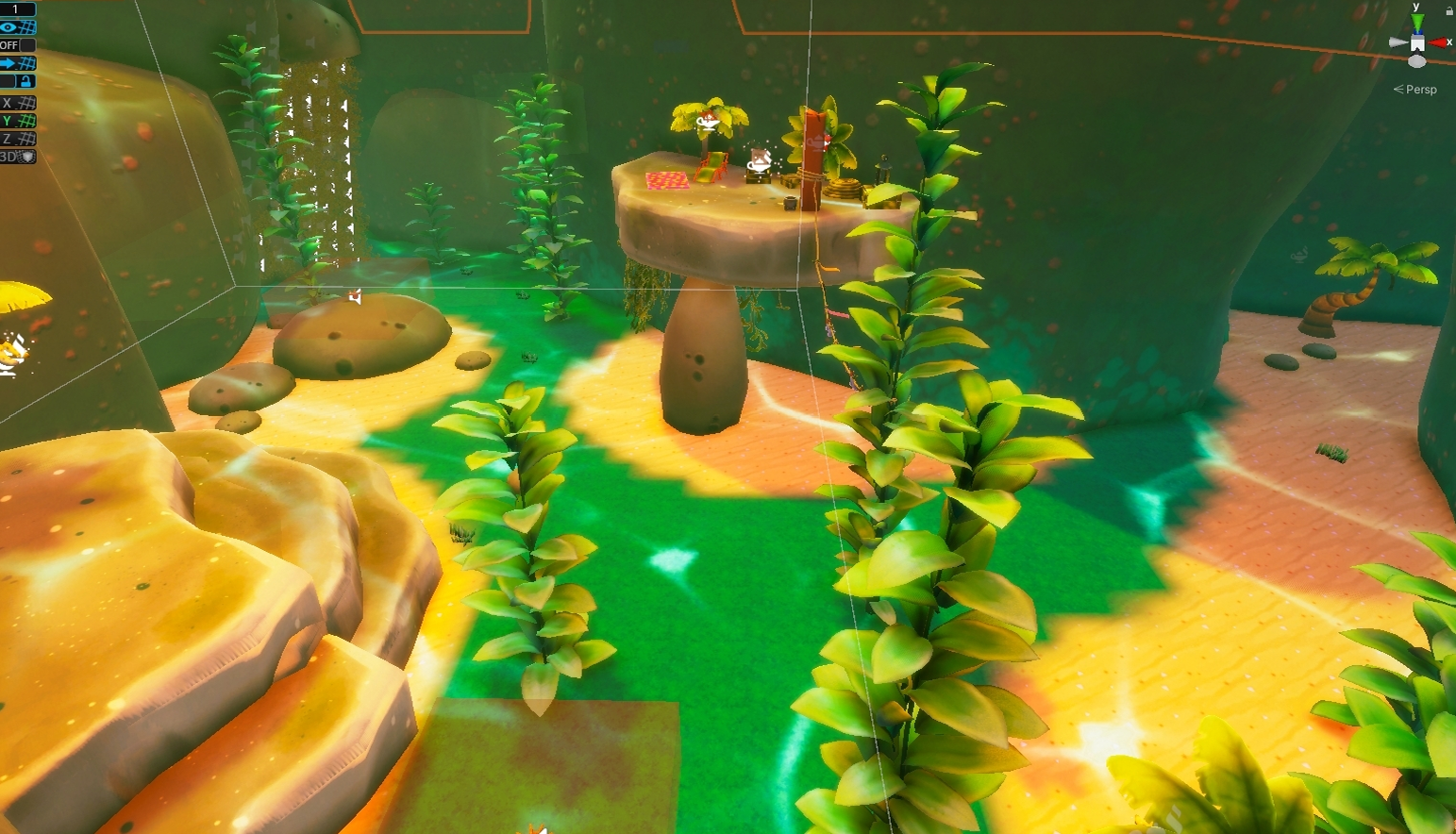
The first part of the level is designed as a reappropriation zone, in which the player reuses all the mechanics introduced in the previous level, which serves as a tutorial.
The second zone highlights more strongly what defines the identity of Babbles, that is to say exploration, contemplation, and above all. And this is what makes my level unique is a strong feeling of smallness in relation to the environment.
Through this project, I sought to demonstrate my ability to use spatial contrast, scale management, and emotional progression as level design tools, in order to propose a clear and memorable experience, while respecting the original game.
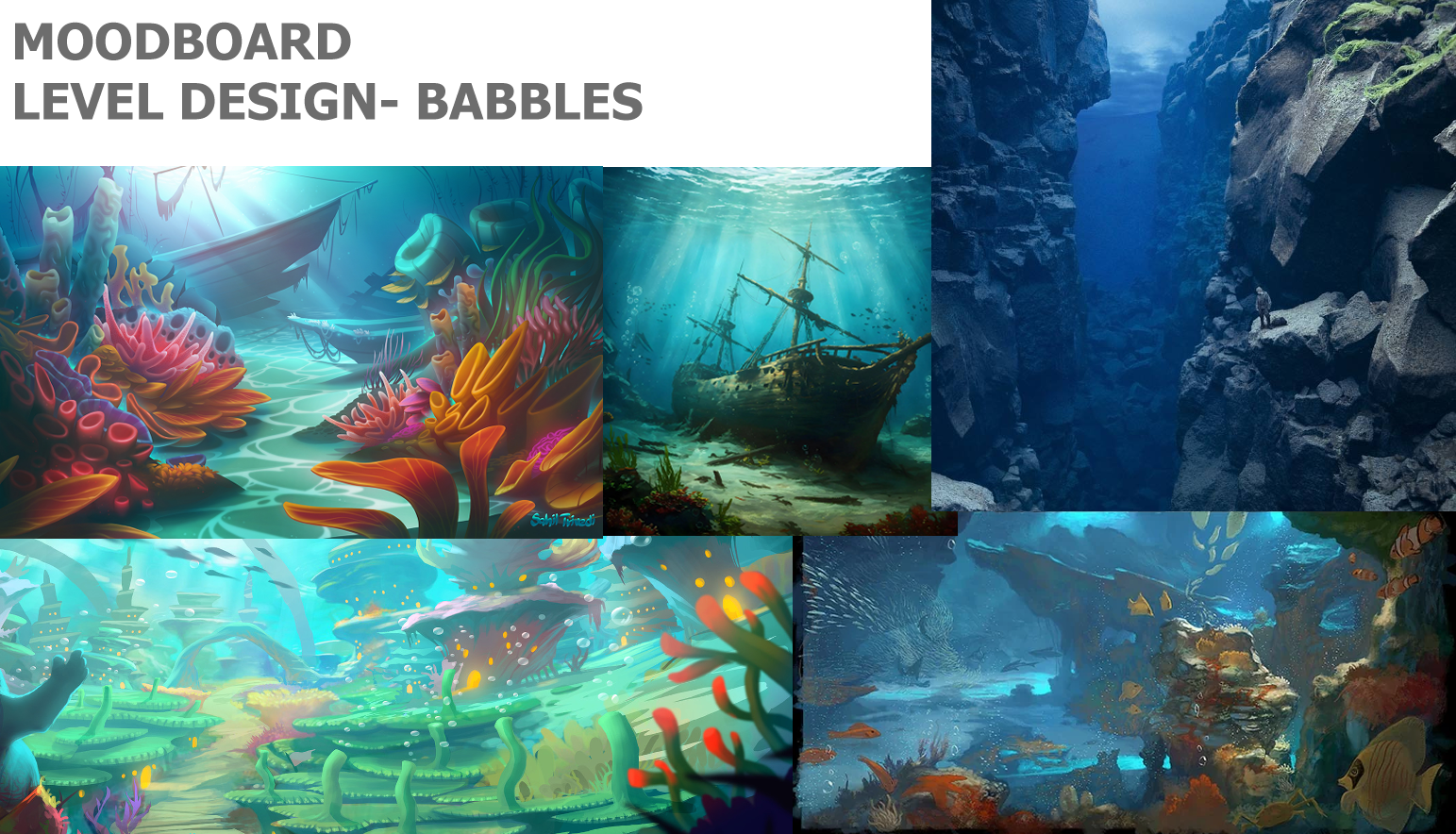
Here is the moodboard I created to nurture my inspiration and take visual references:
LEVEL DESIGN :
Layout 2D :
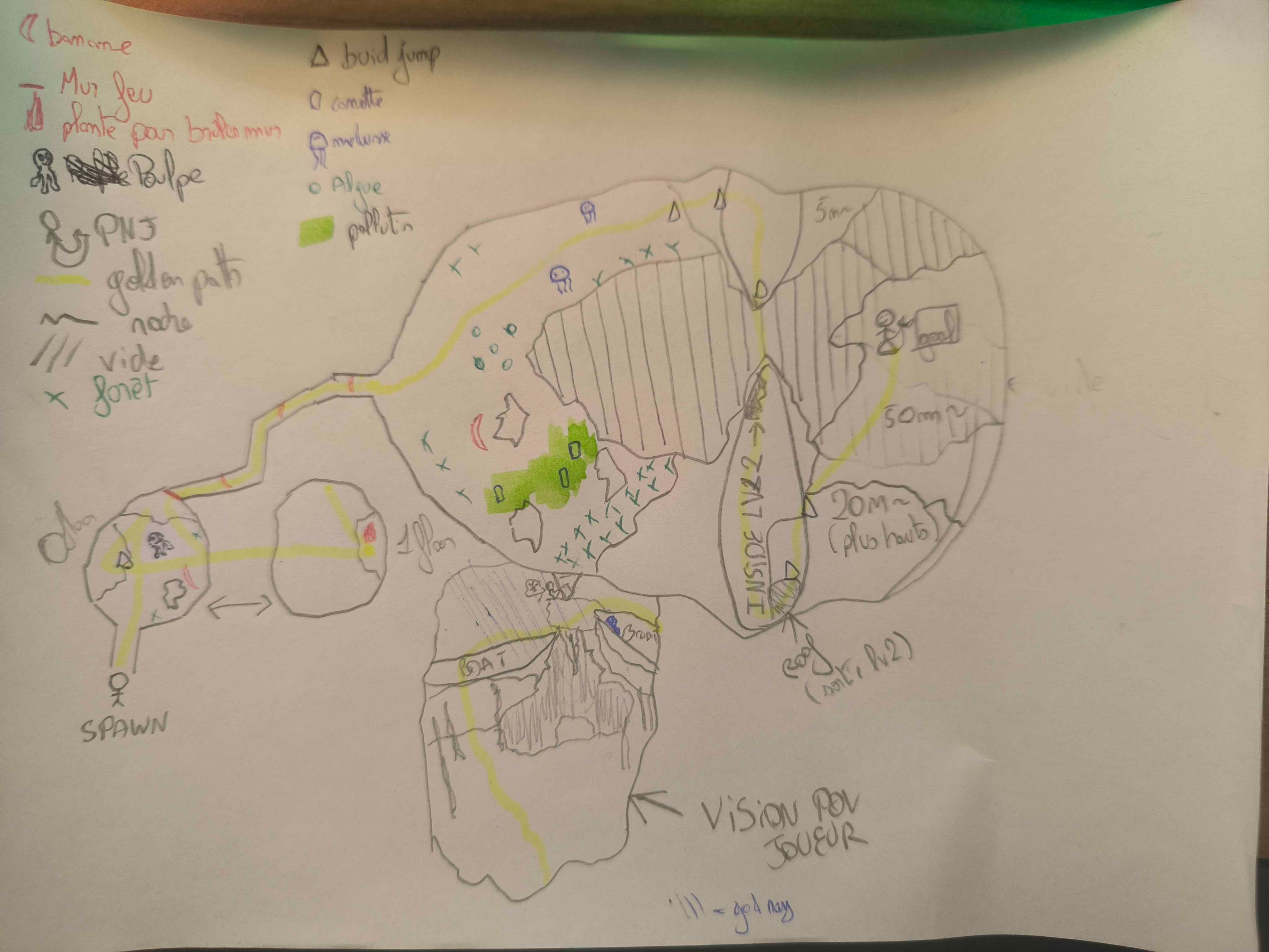
Obviously, before working in the engine, it is essential for me to structure my ideas on paper.
This allows me to evaluate whether the concepts work, but also, in the context of teamwork, to be able to present and explain my work before production. This step also helps save time during the creation of the blockout.
Timeline :
Step 01 :
Discovery of the first "zone"
where the player reuses what was learned in the tutorial
and understood all the mechanics that will be used throughout the level
Emotion(s): Curiosity, Observation, Accomplishment
Step 02 :
The path between the two "zones"
After the first zone, the player goes through a deep chasm
Emotion(s): Claustrophobia, Impatience, Interrogation
Step 03 :
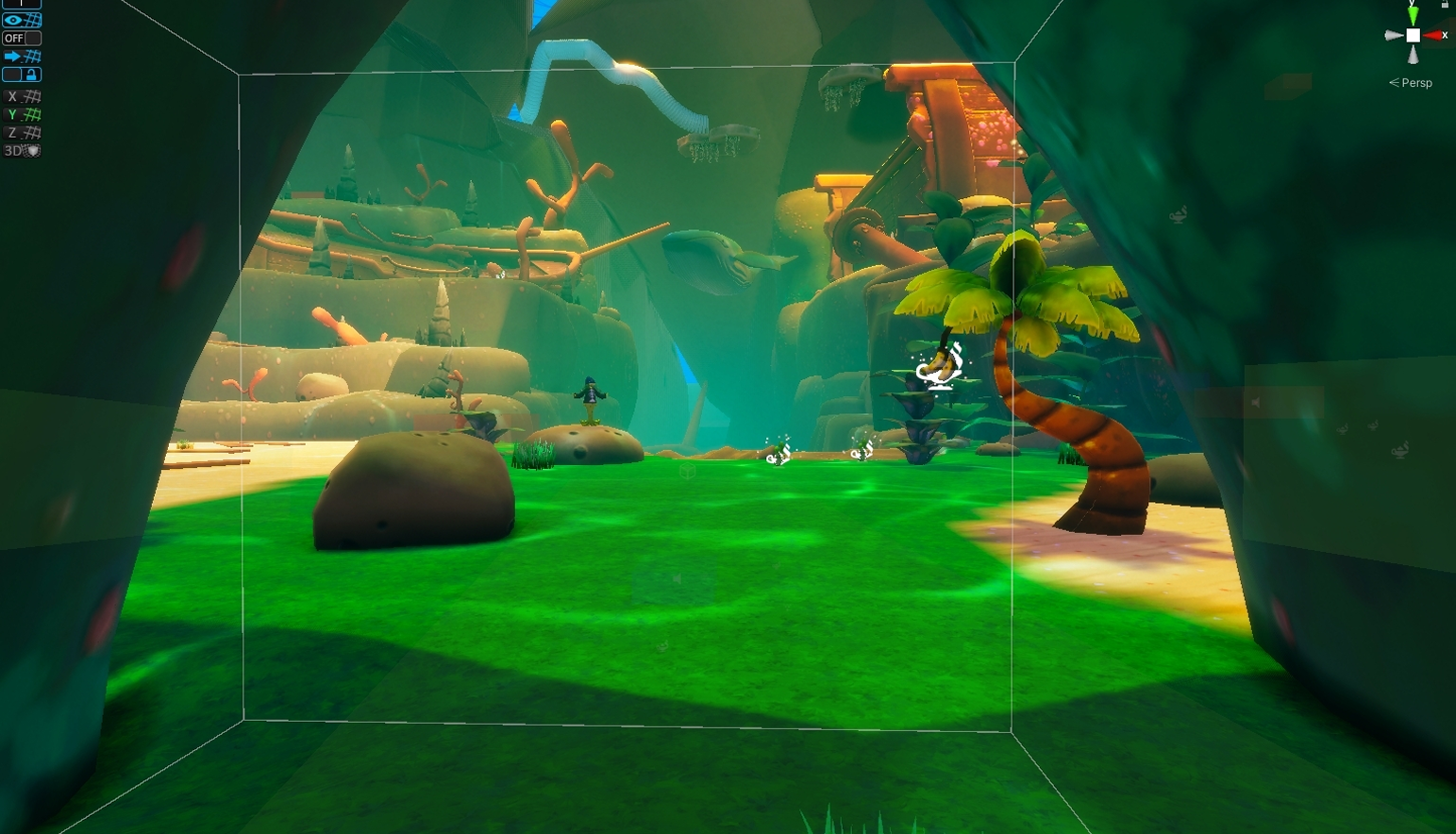
Discovery of the second "zone"
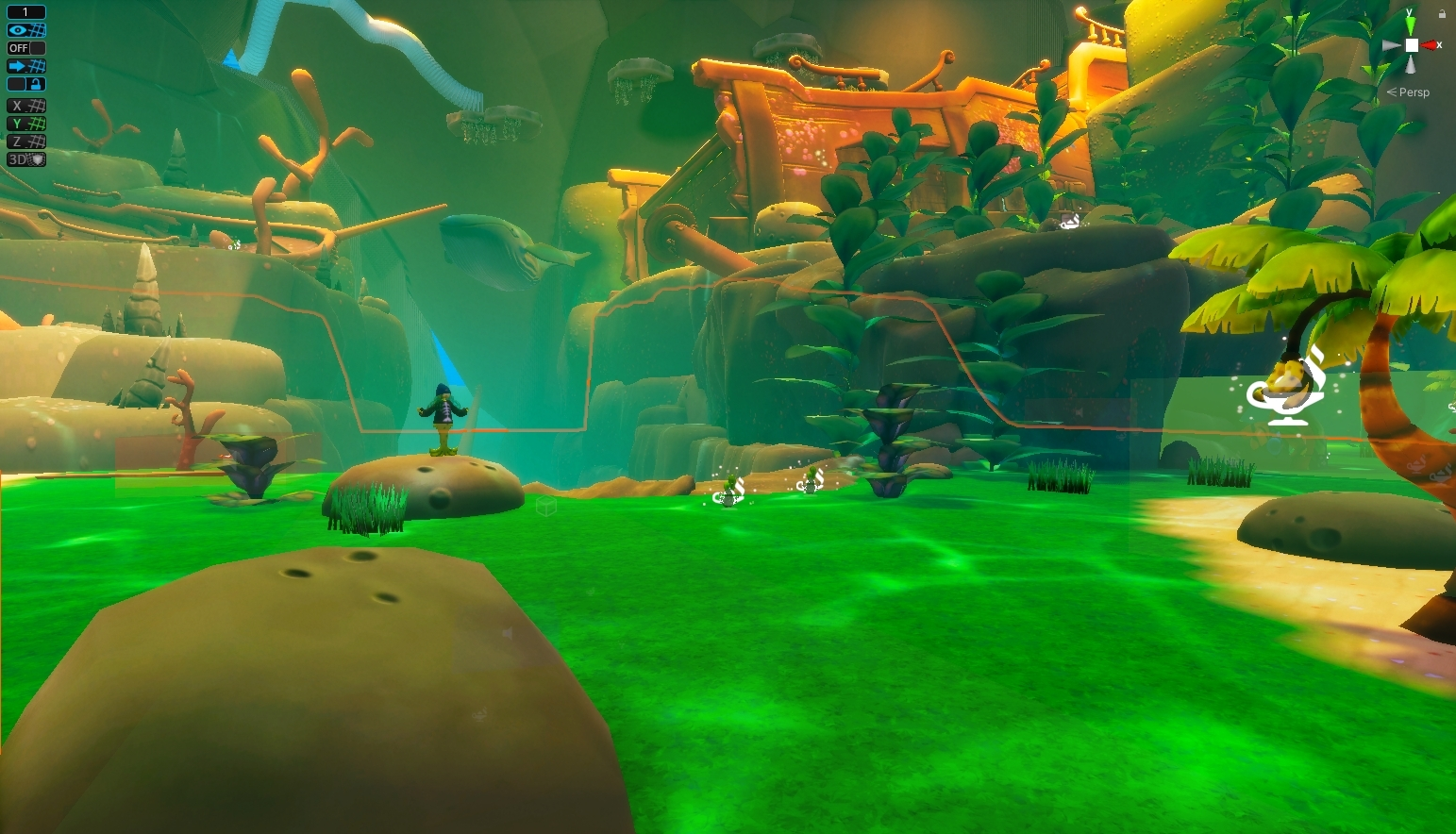
When the player leaves the deep chasm, he is welcomed by a strong "wow" effect
as he discovers the widest part of the level. This creates a huge contrast with the previous zone,
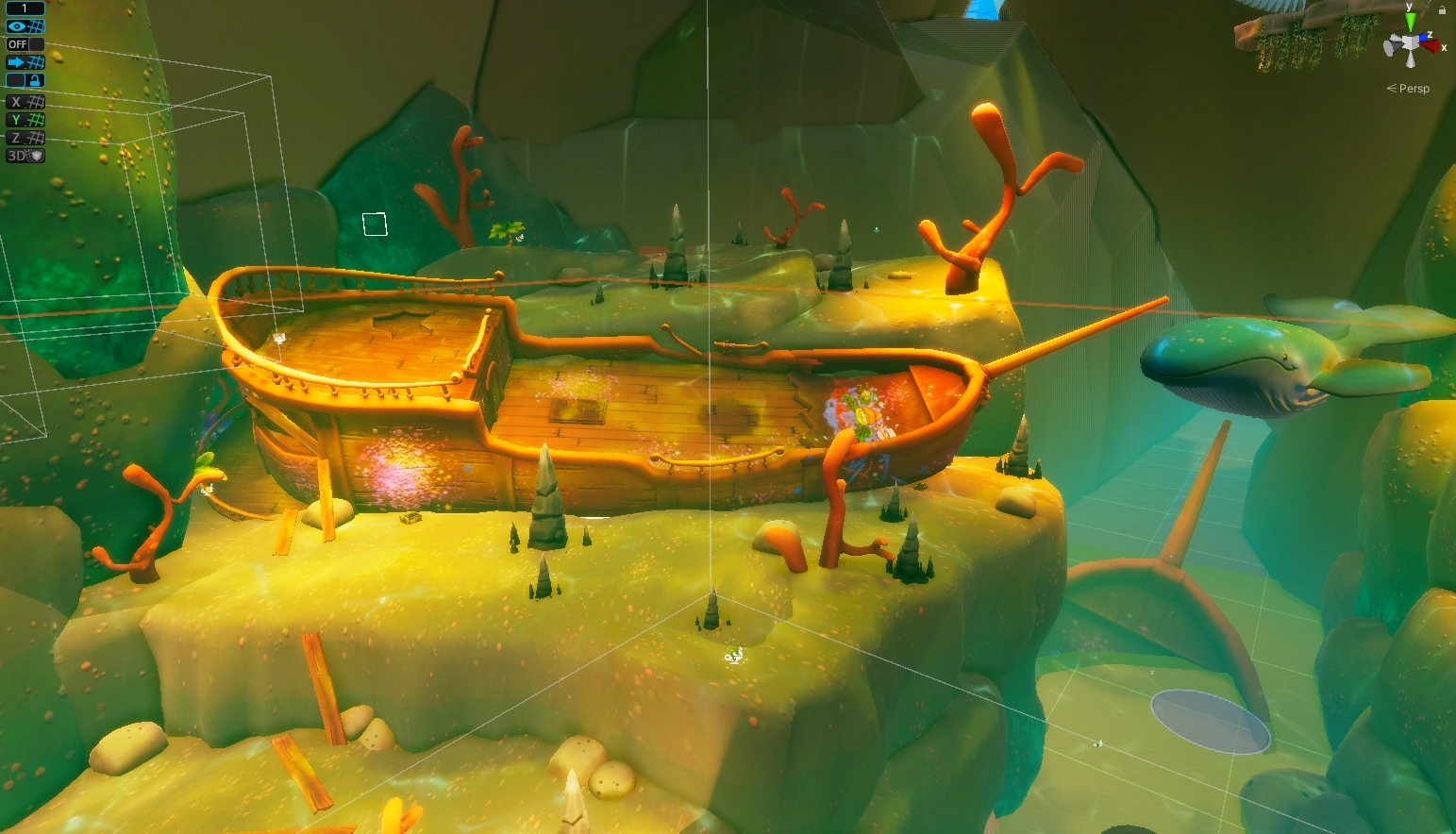
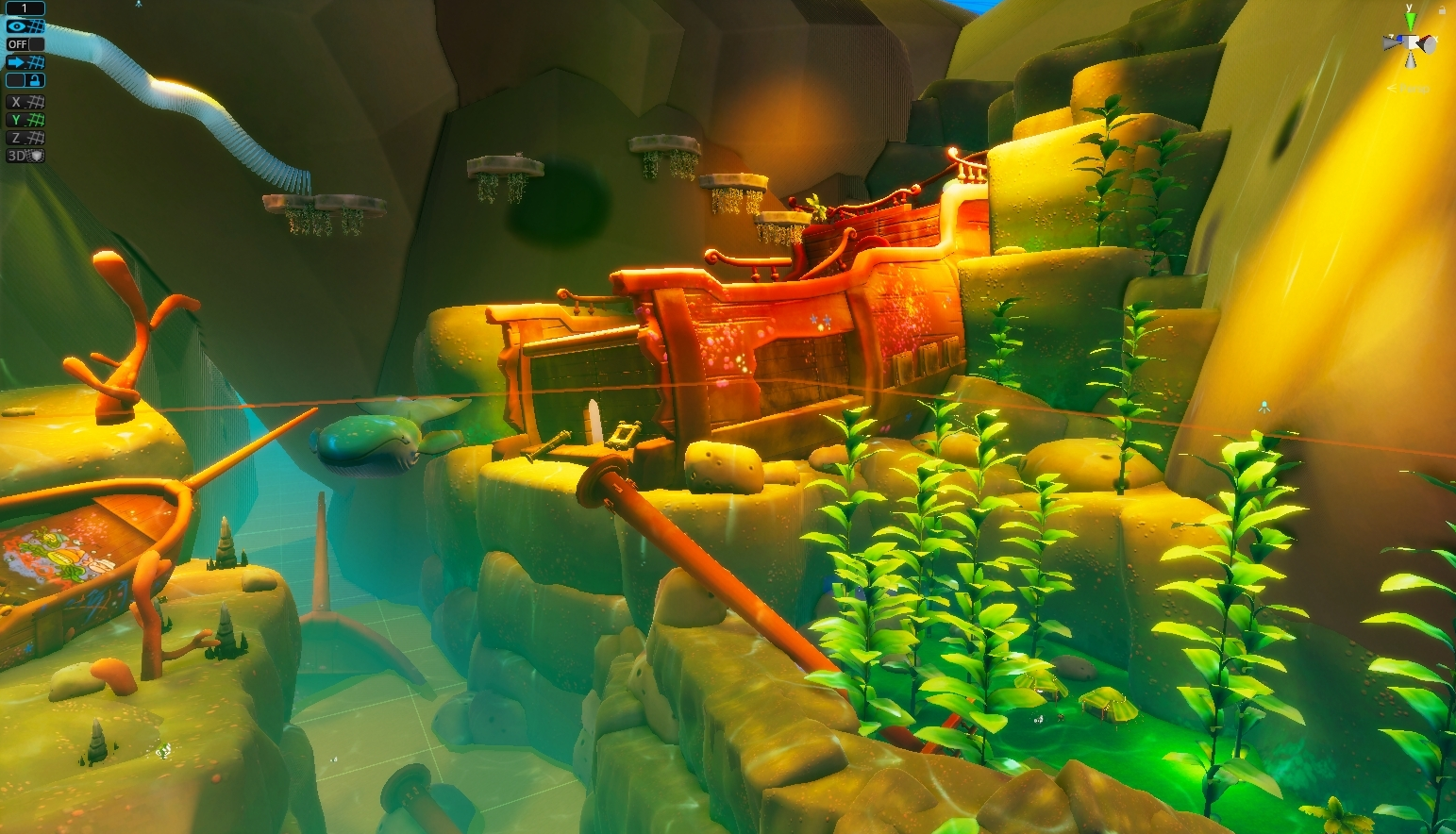
enhanced by the lighting, and the color palette used in this area and the presence of massive shipwrecks.
He also sees his main goal, where he should go.
Emotion(s): Awe, Sense of Freedom, Exploration, Feeling of smallness
Step 04 :
Arrived at the main goal
After exploring the area and moving through the shipwrecks,
the player reaches the end of the level after a sequence of jumps.
Emotion(s): Sense of Height, Accomplishment
Level Design Intention :
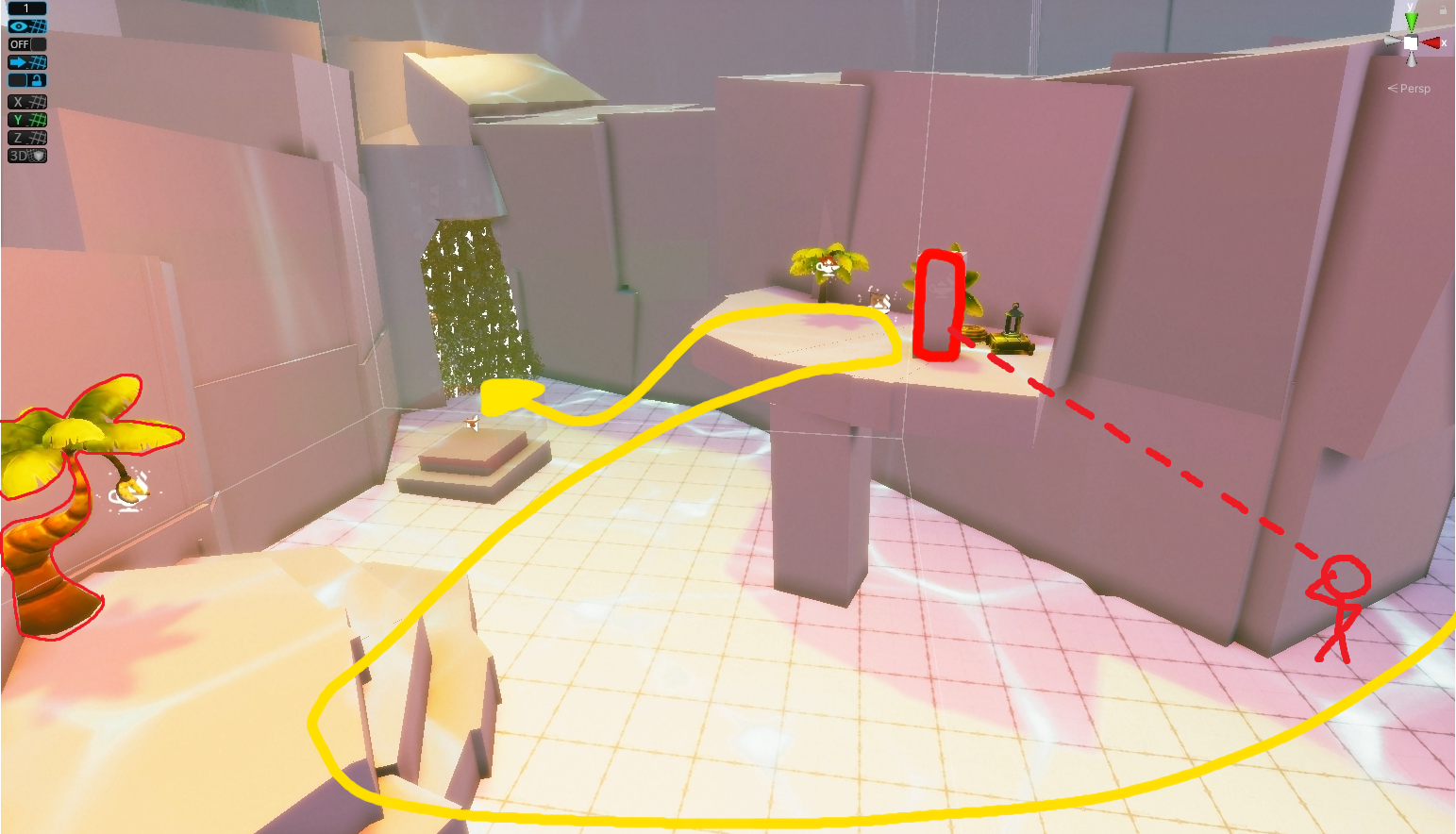
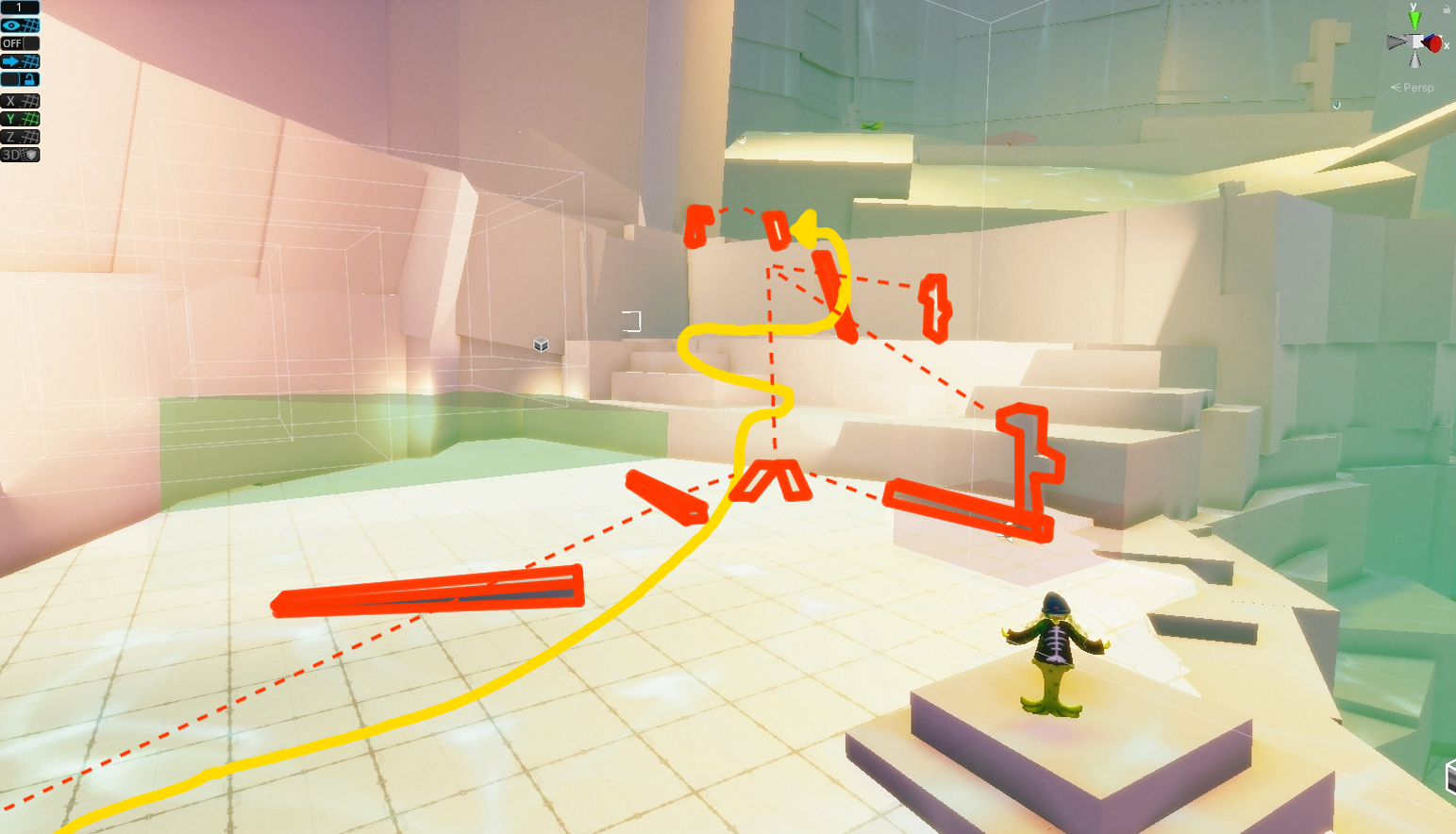
RED = Leading Lines / Affordance / Highlight YELLOW = Golden Path CYAN = Second Path ORANGE = Lightning
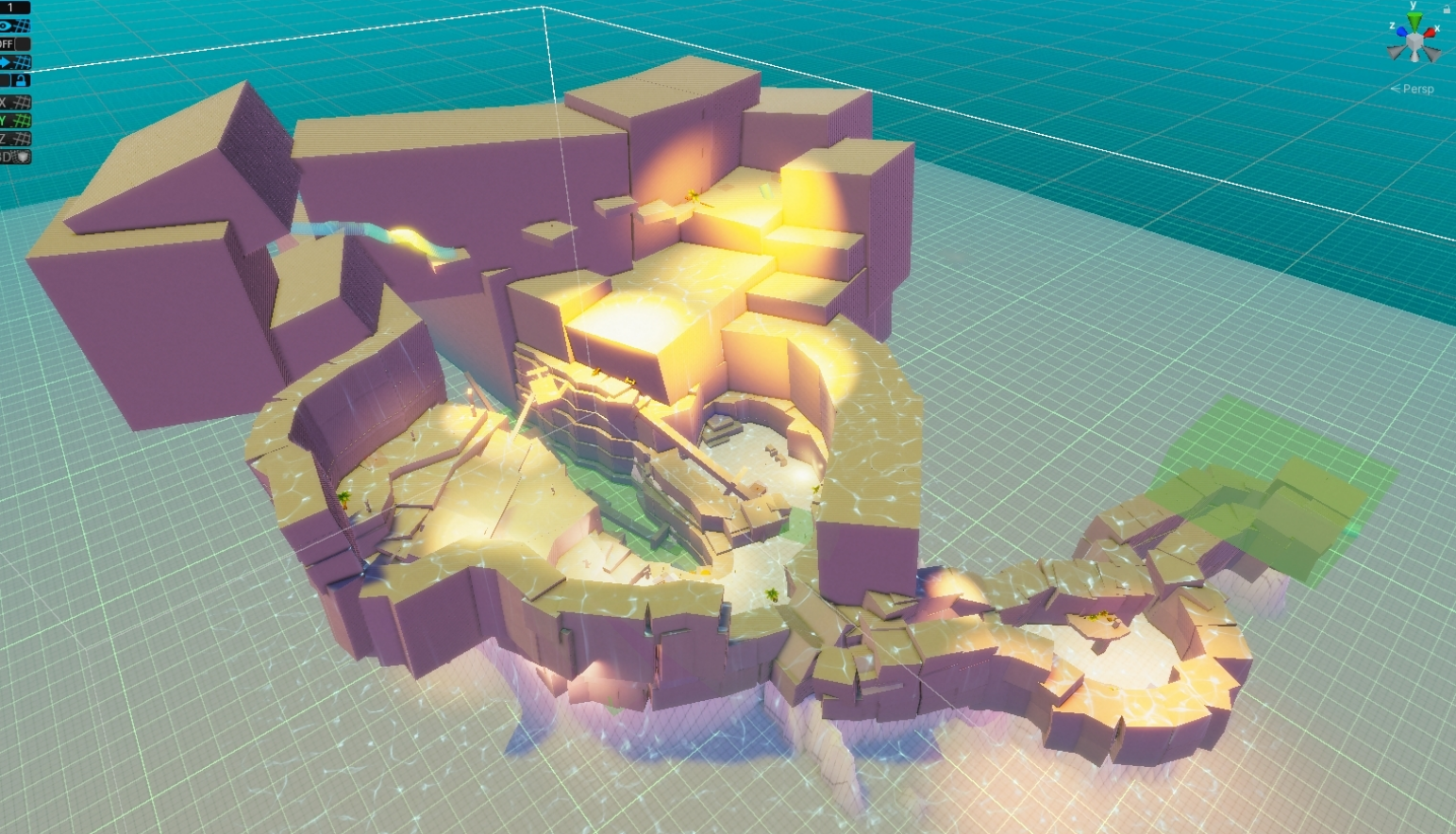
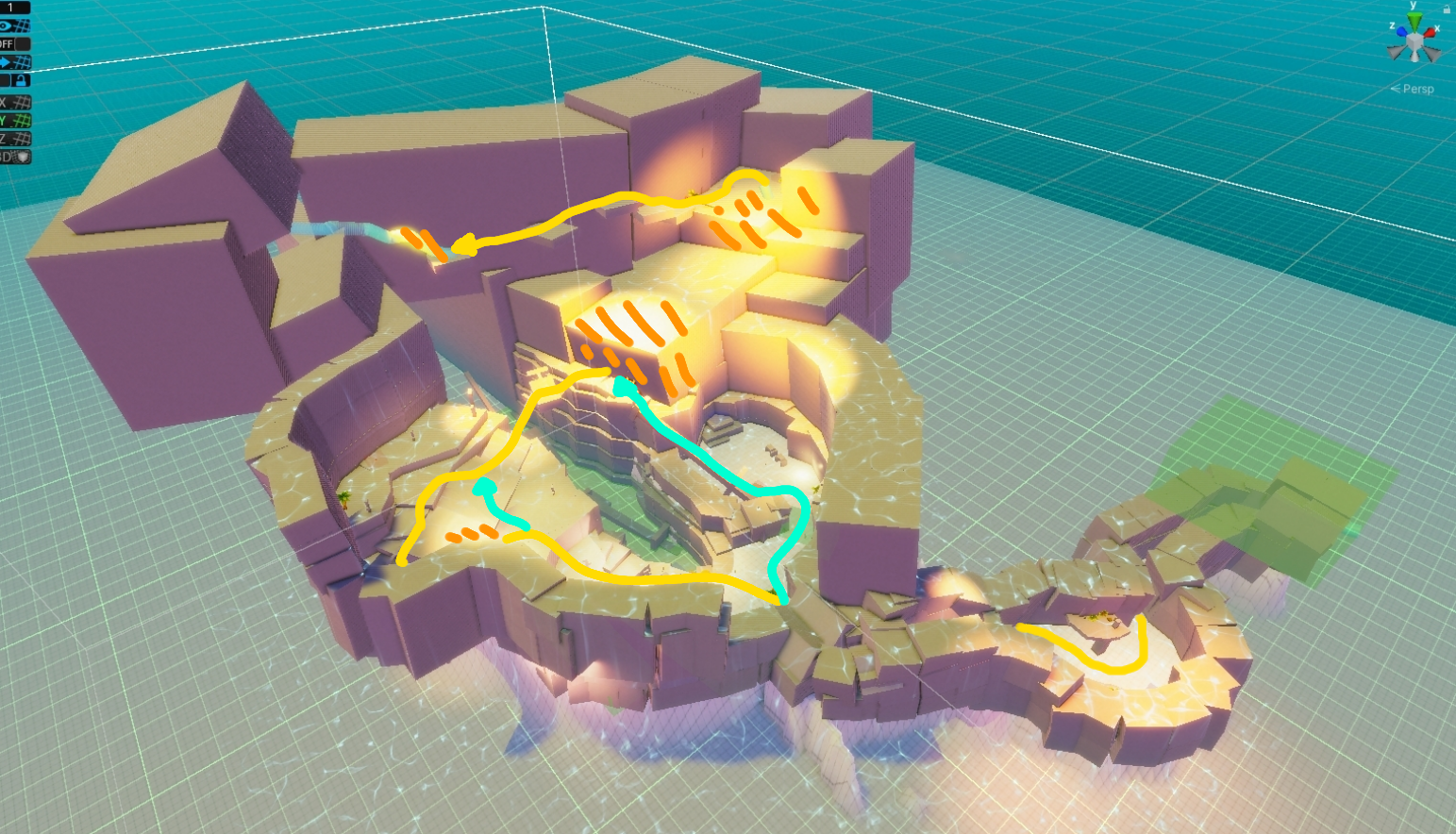
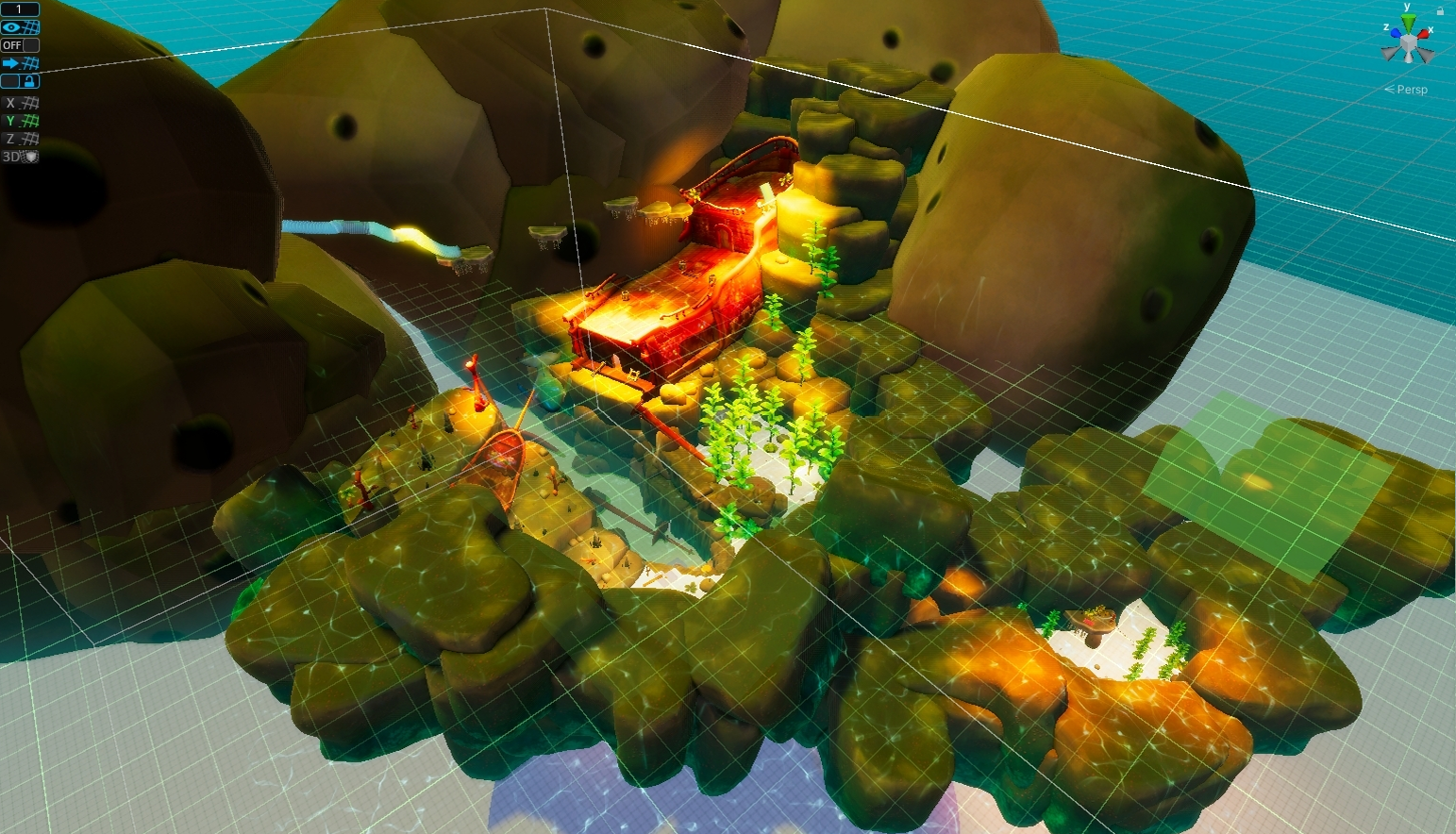
Global view of the level, structured around a Golden Path and a Second Path.
Lighting and landmarks subtly guide the player toward the final objective.
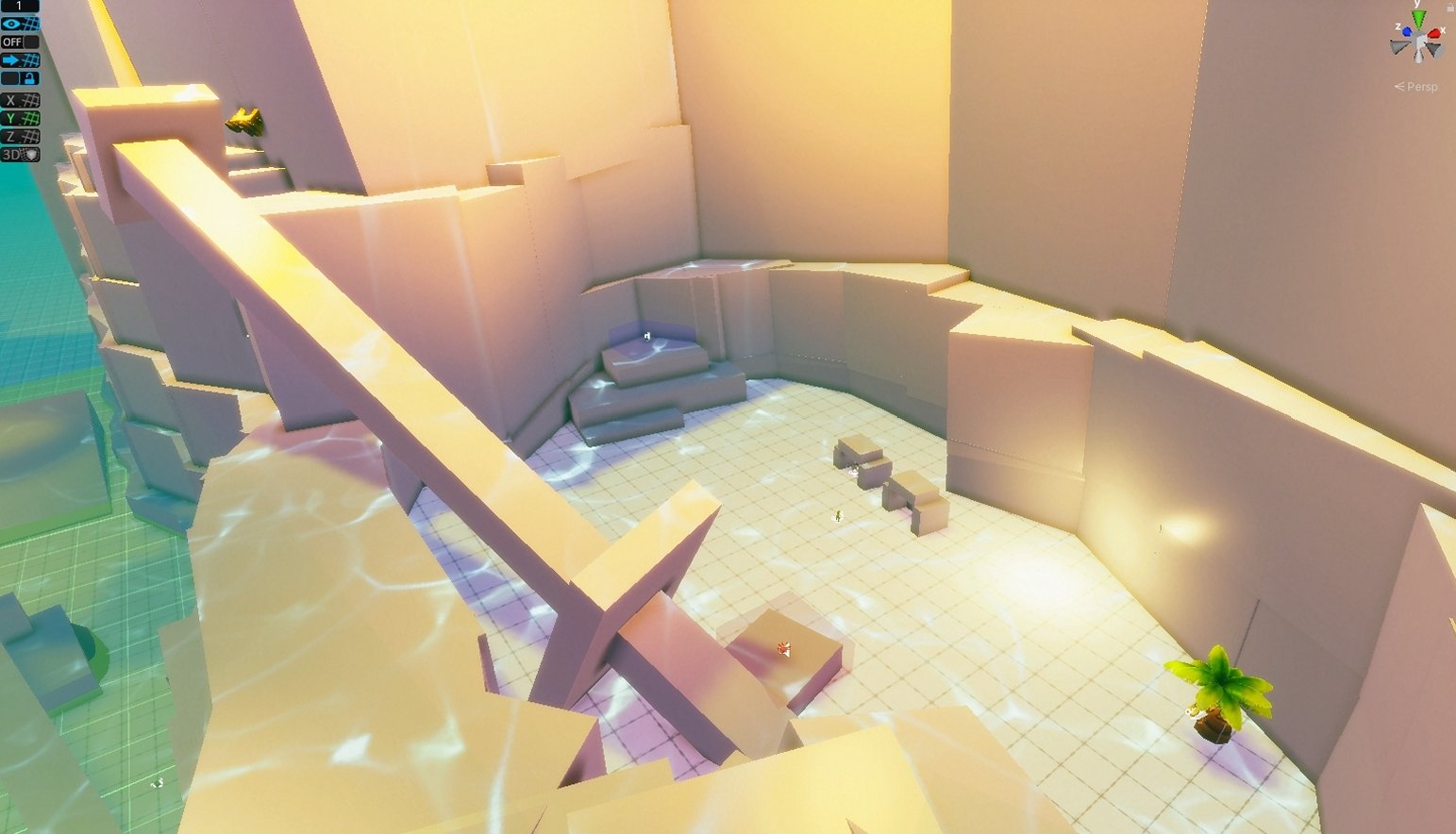
The first zone reintroduces the key mechanics of the level, notably bumper crafting.
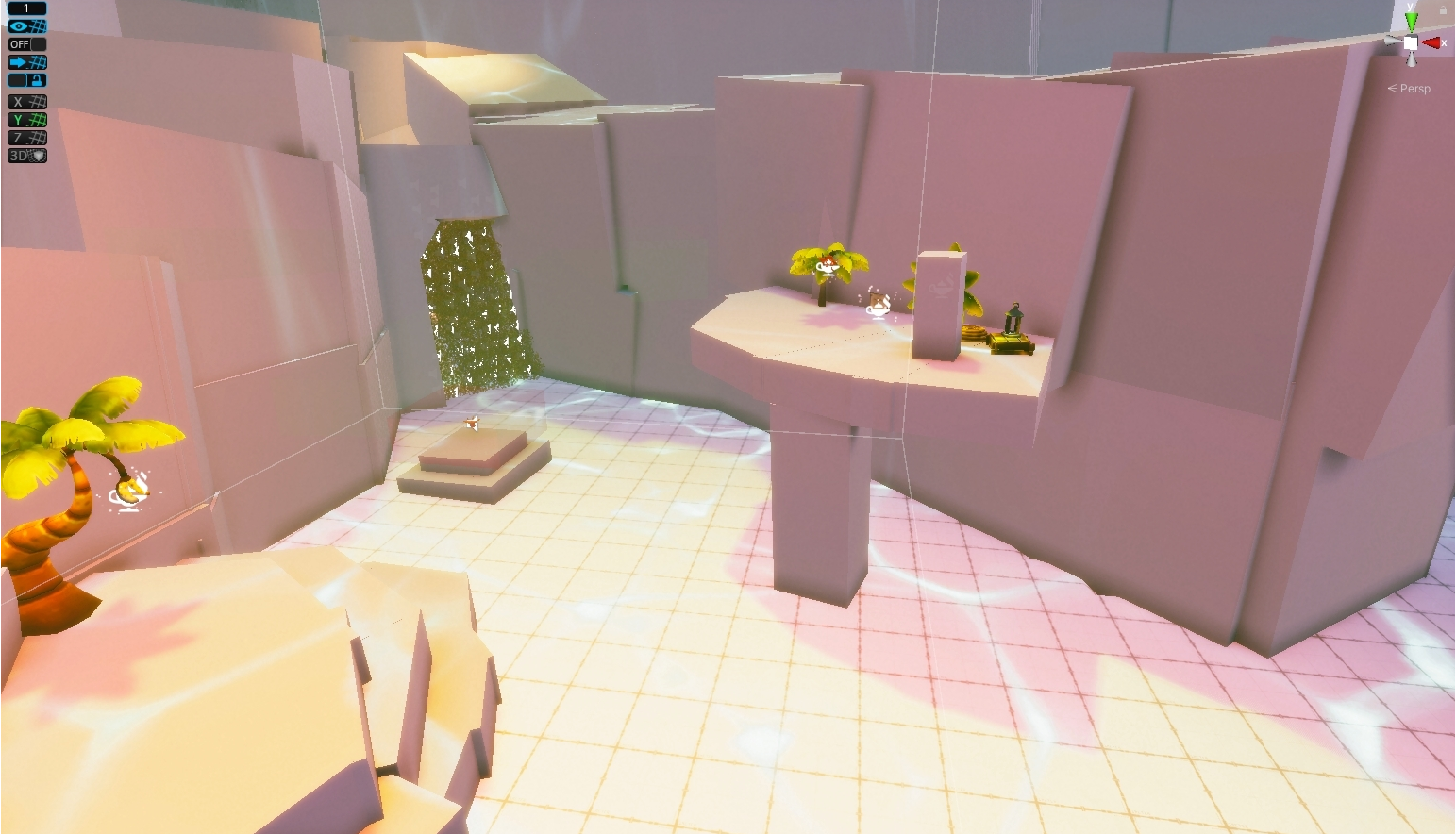
Framing and composition clearly indicate the objective to reach.
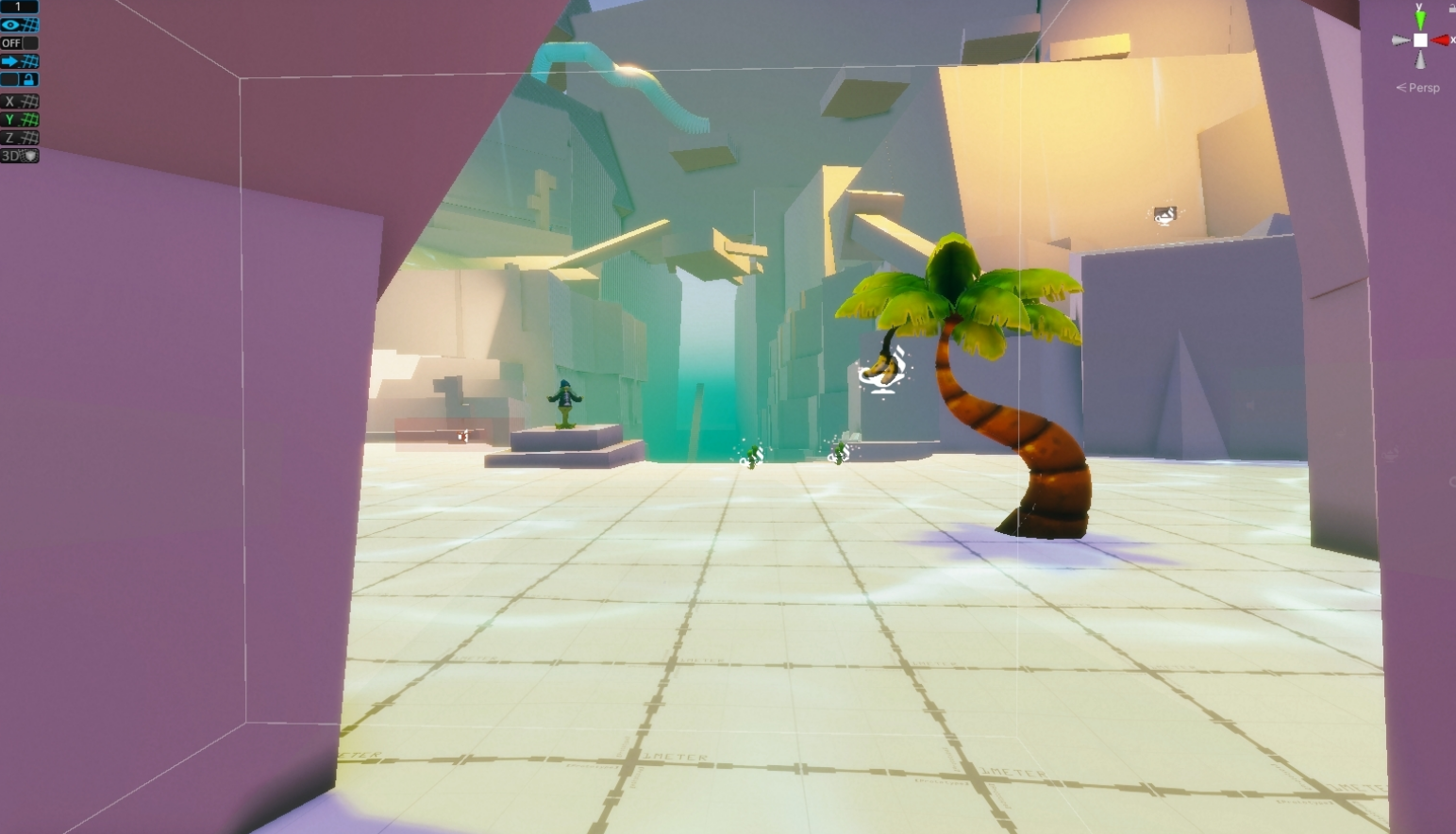
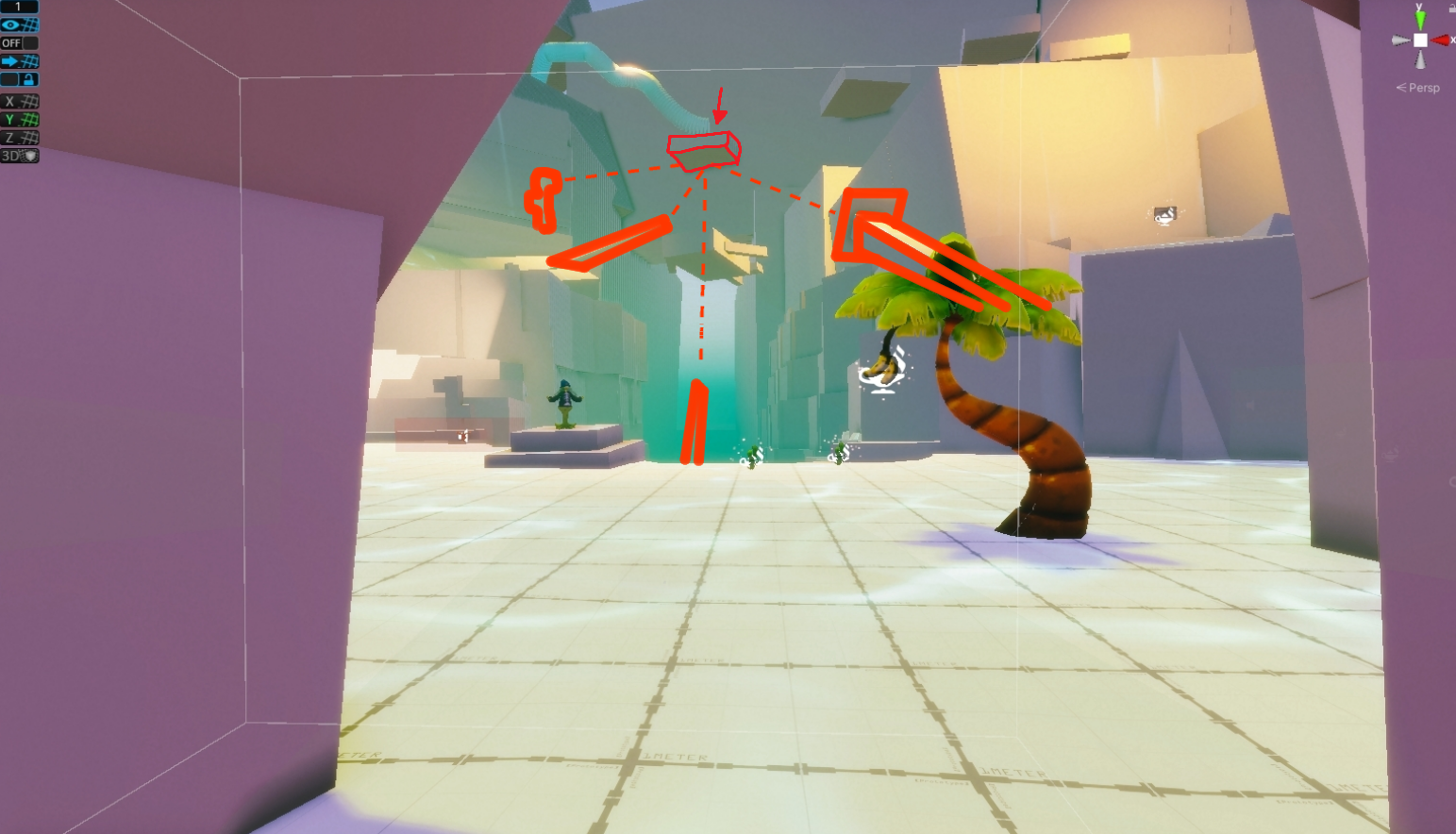
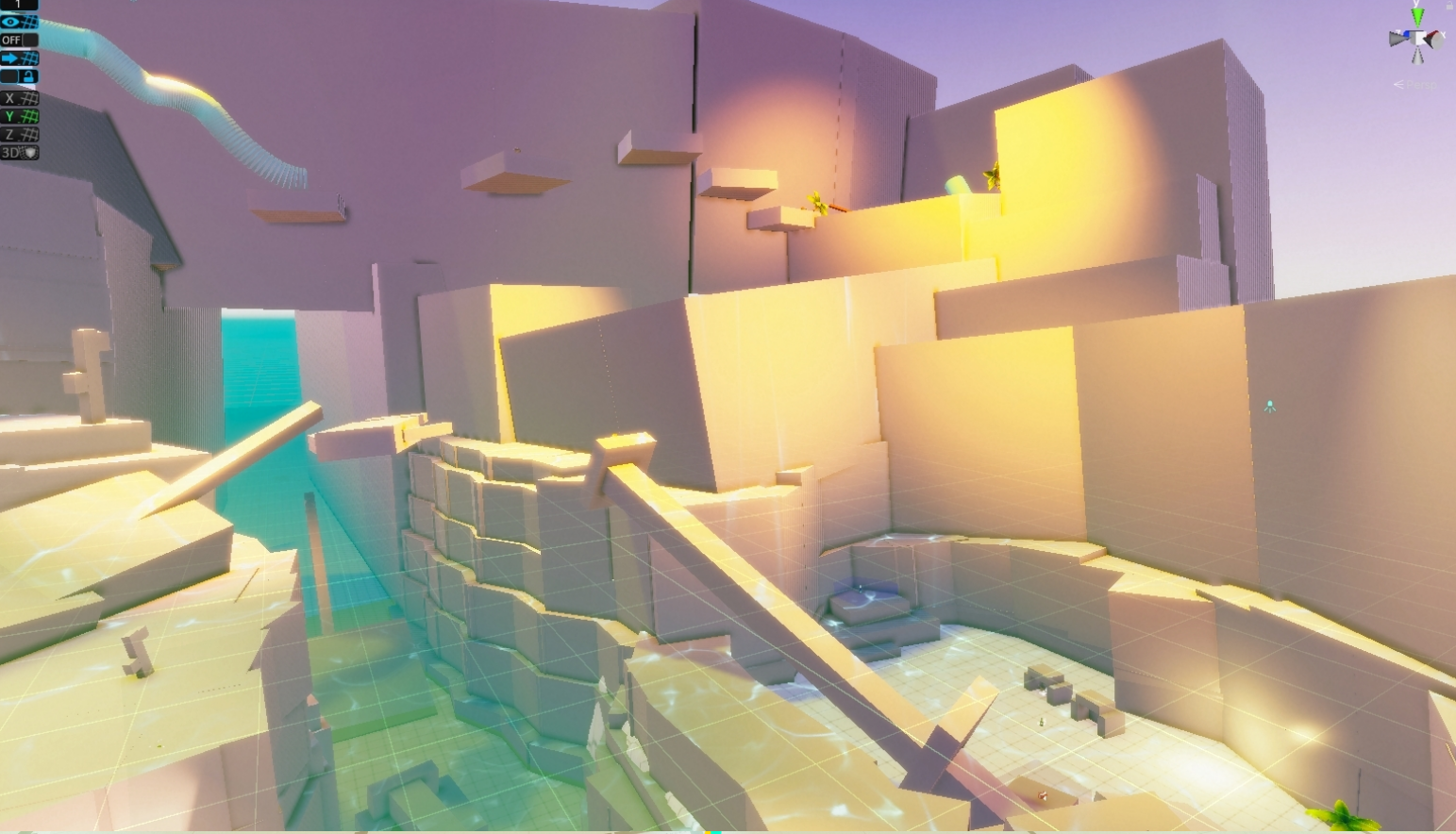
After the pinch point, the player discovers the entire explorable area.
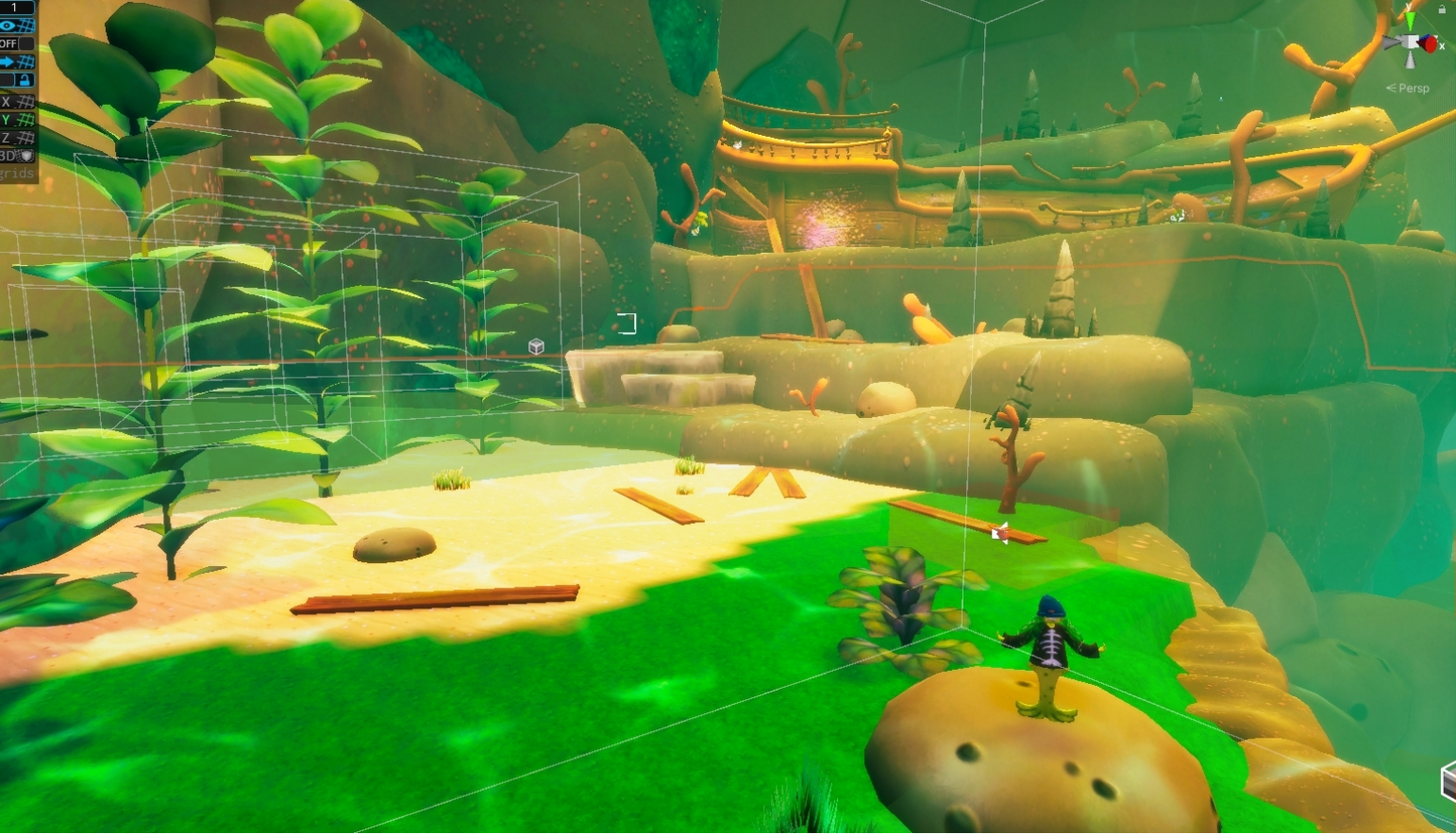
Leading lines naturally guide the player’s gaze toward the final objective.
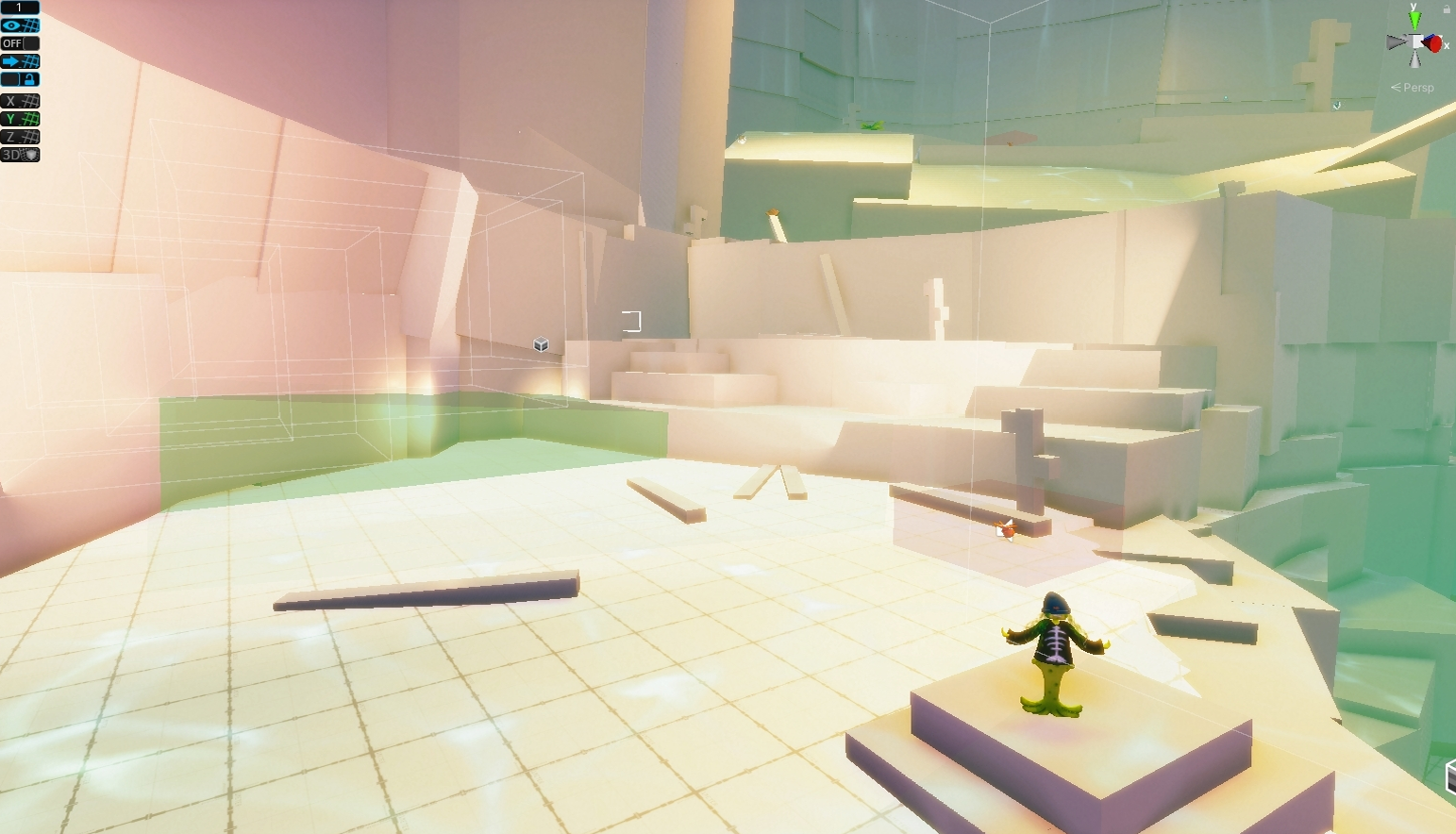
The main path is guided by wooden planks and corals, forming subtle indications.
Lighting reinforces this guidance without breaking immersion.
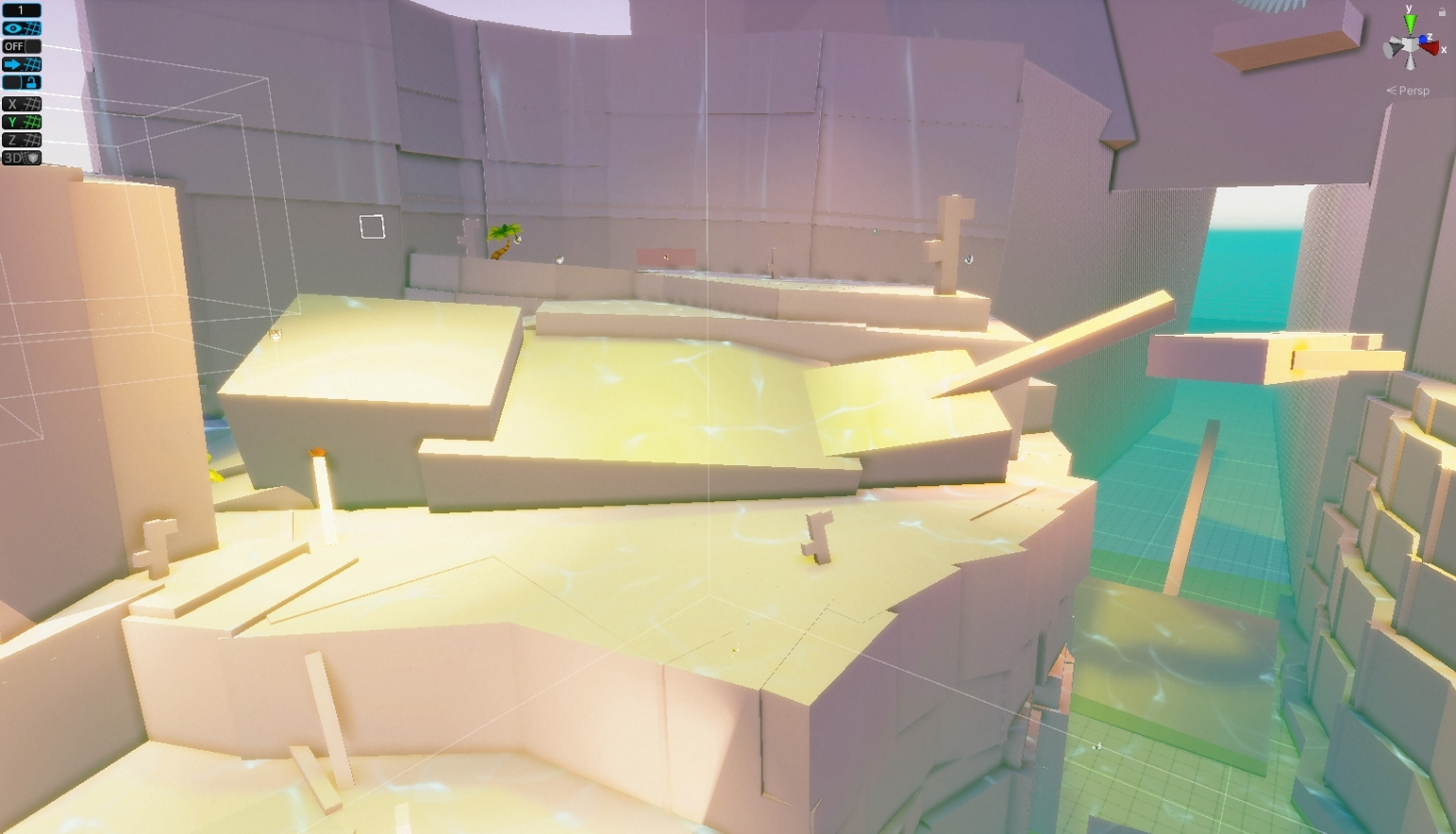
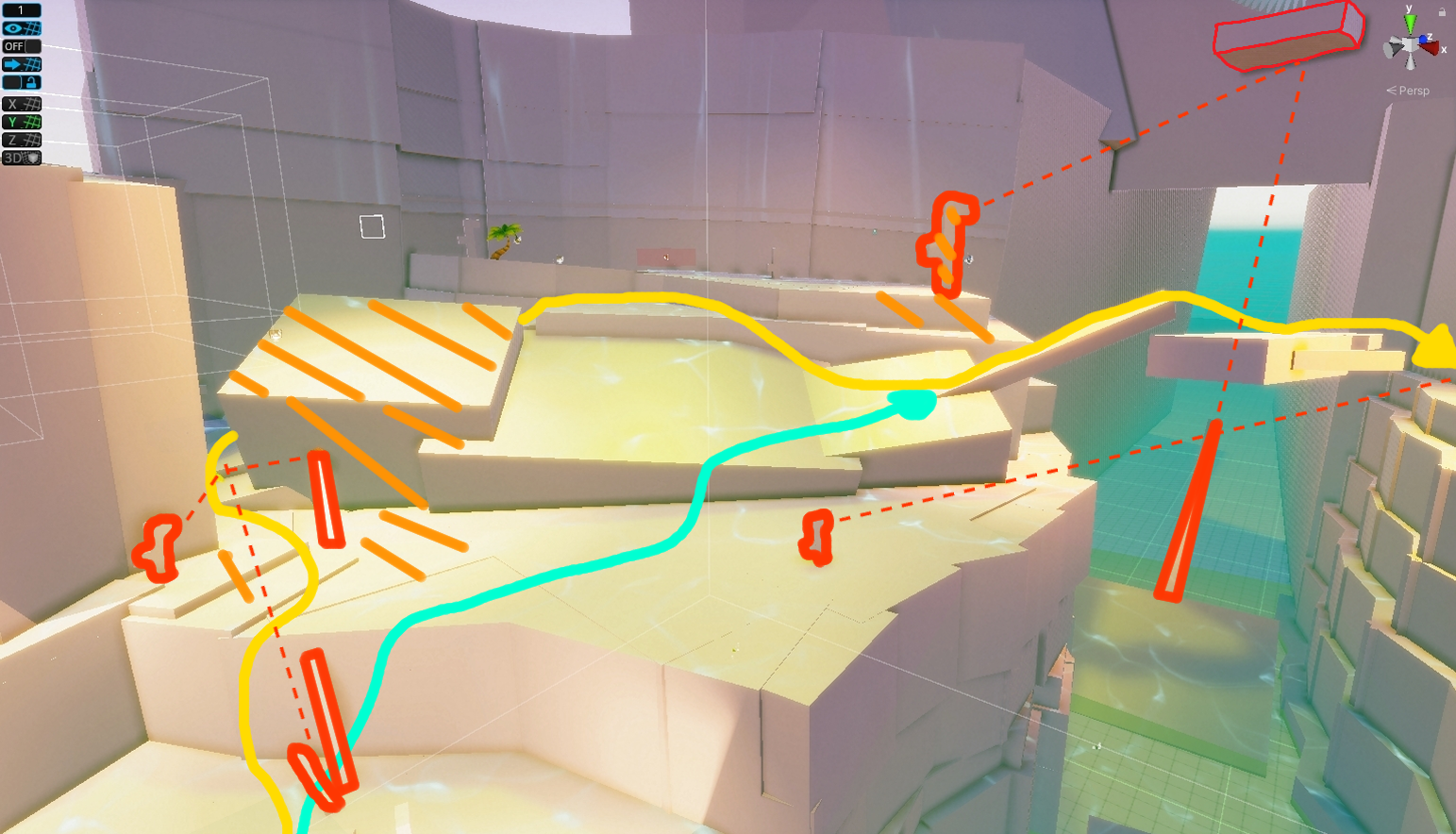
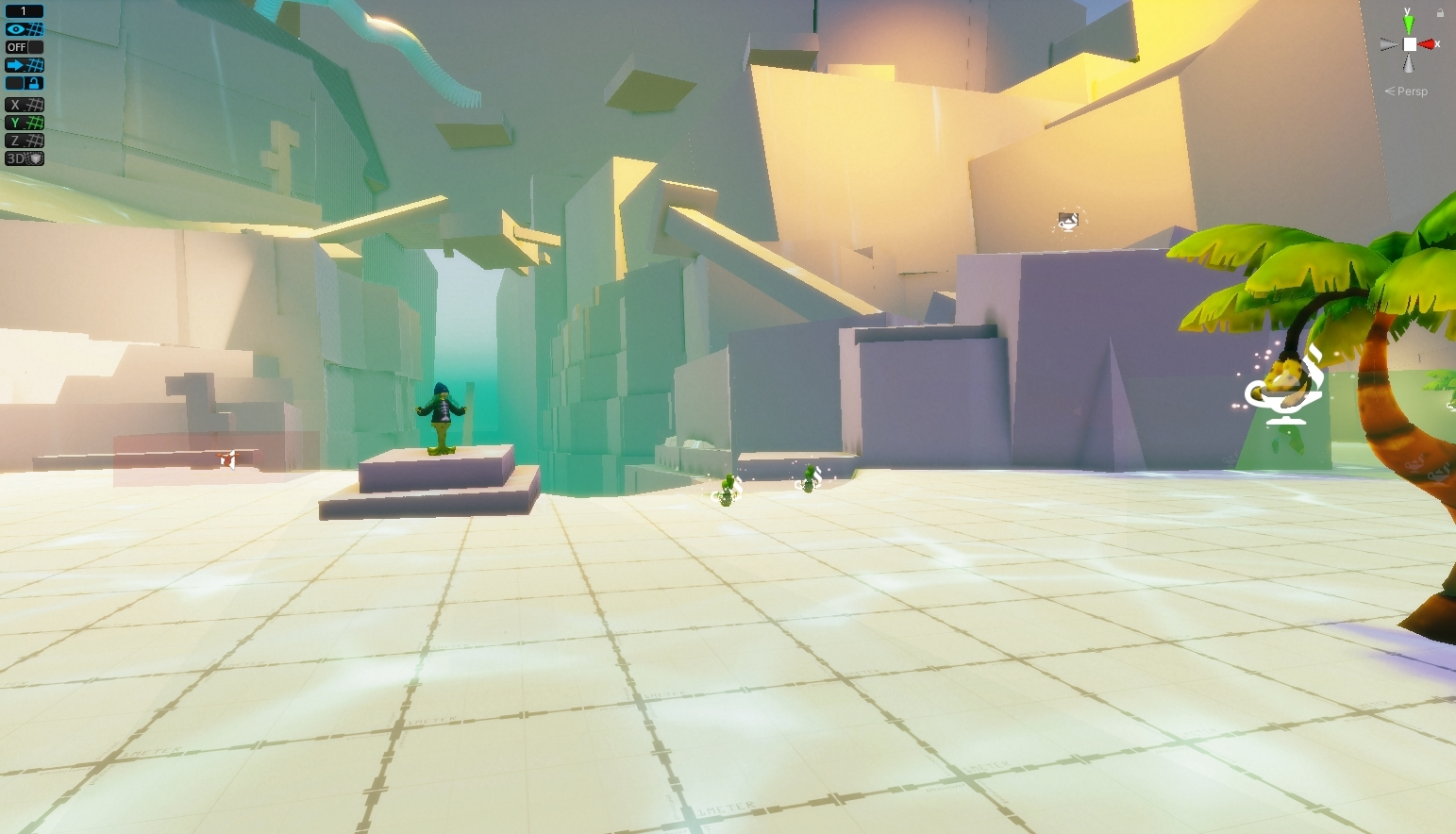
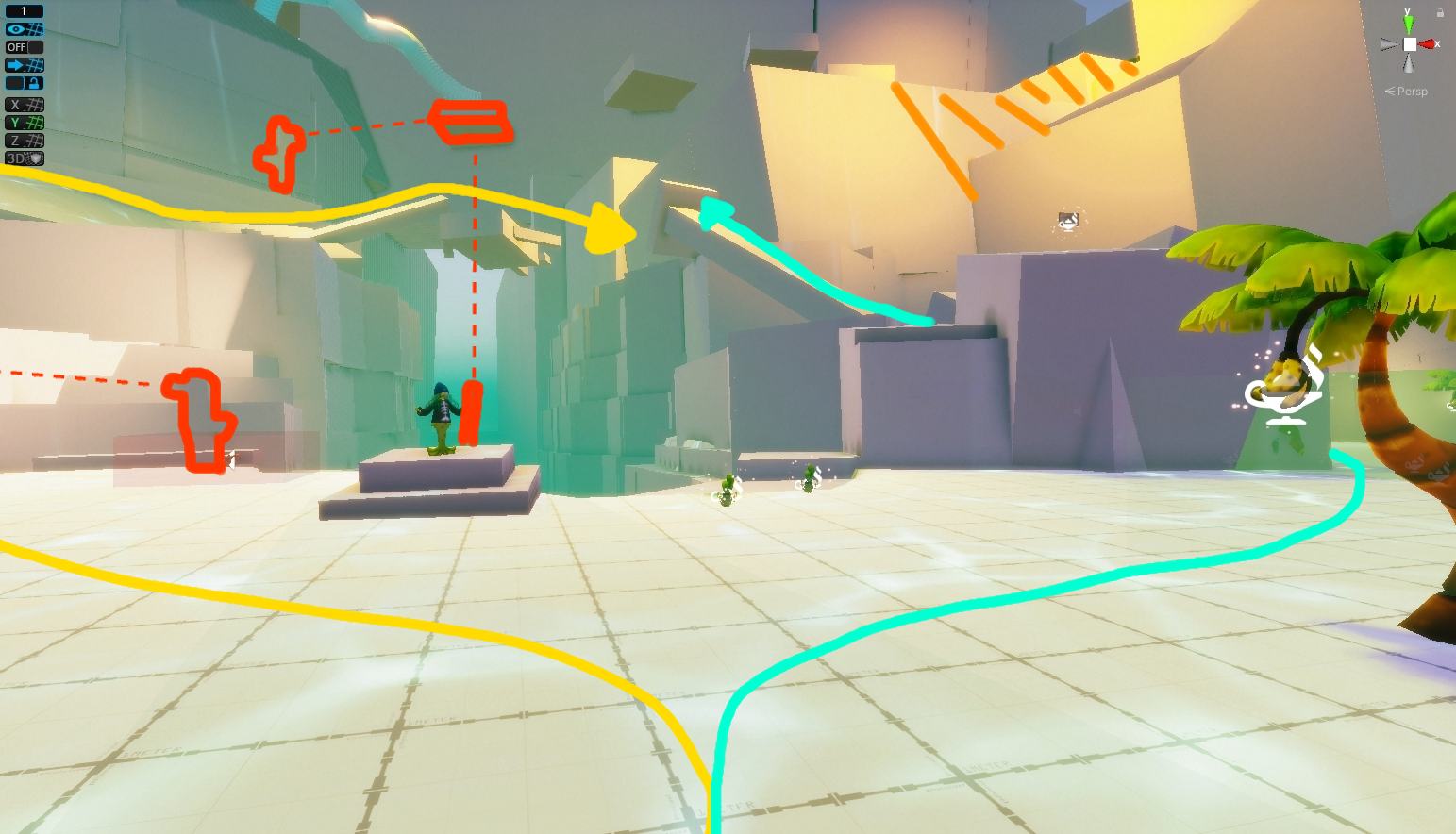
Even along the classic path (Golden Path) that the player is expected to take.
Shortcuts are present and reinforce the identity of Babbles by encouraging exploration.
An alternative path, more risky, offers a shortcut to the player.
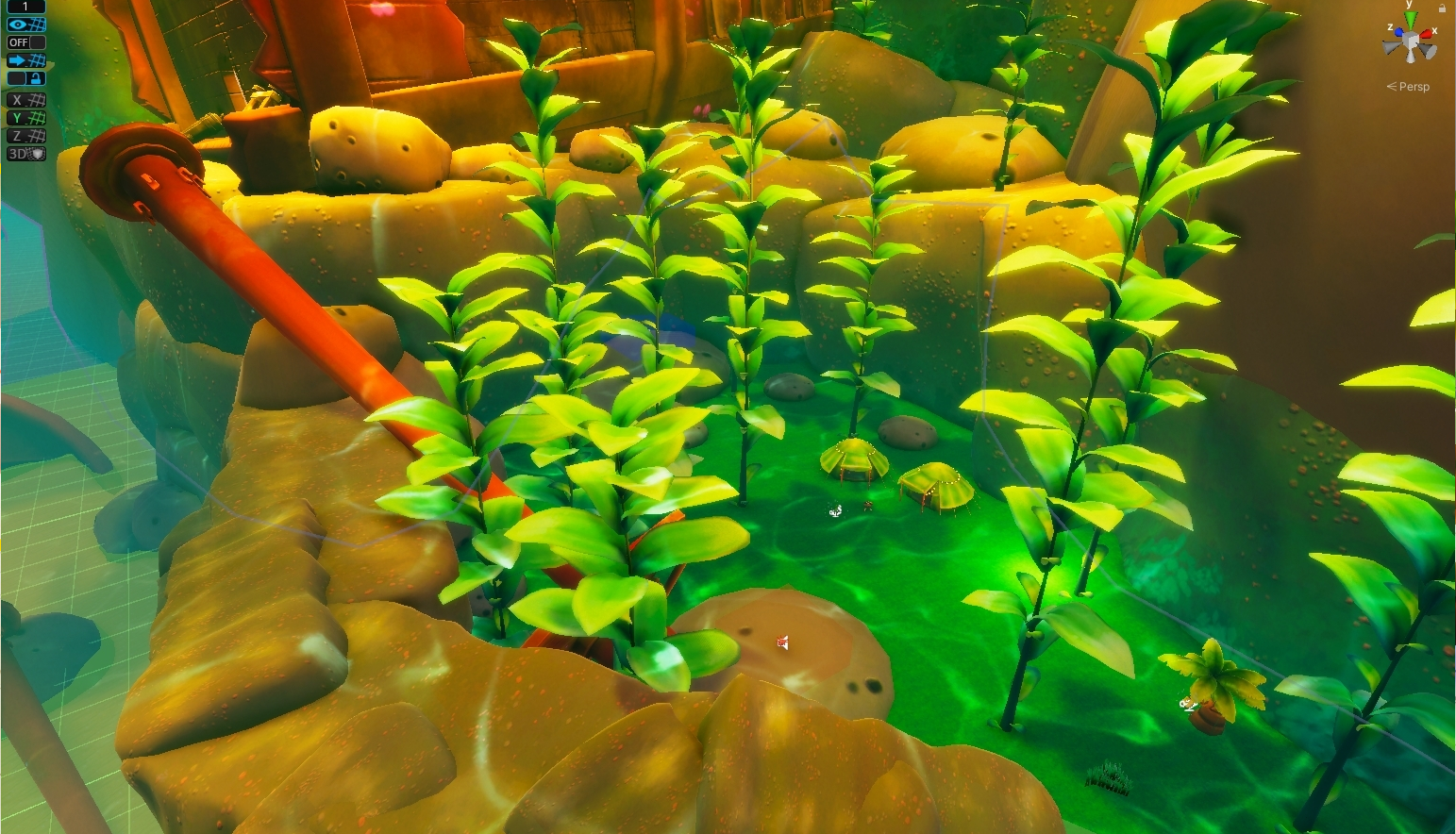
Pollution (represented by a green cube) establishes a risk / reward logic.
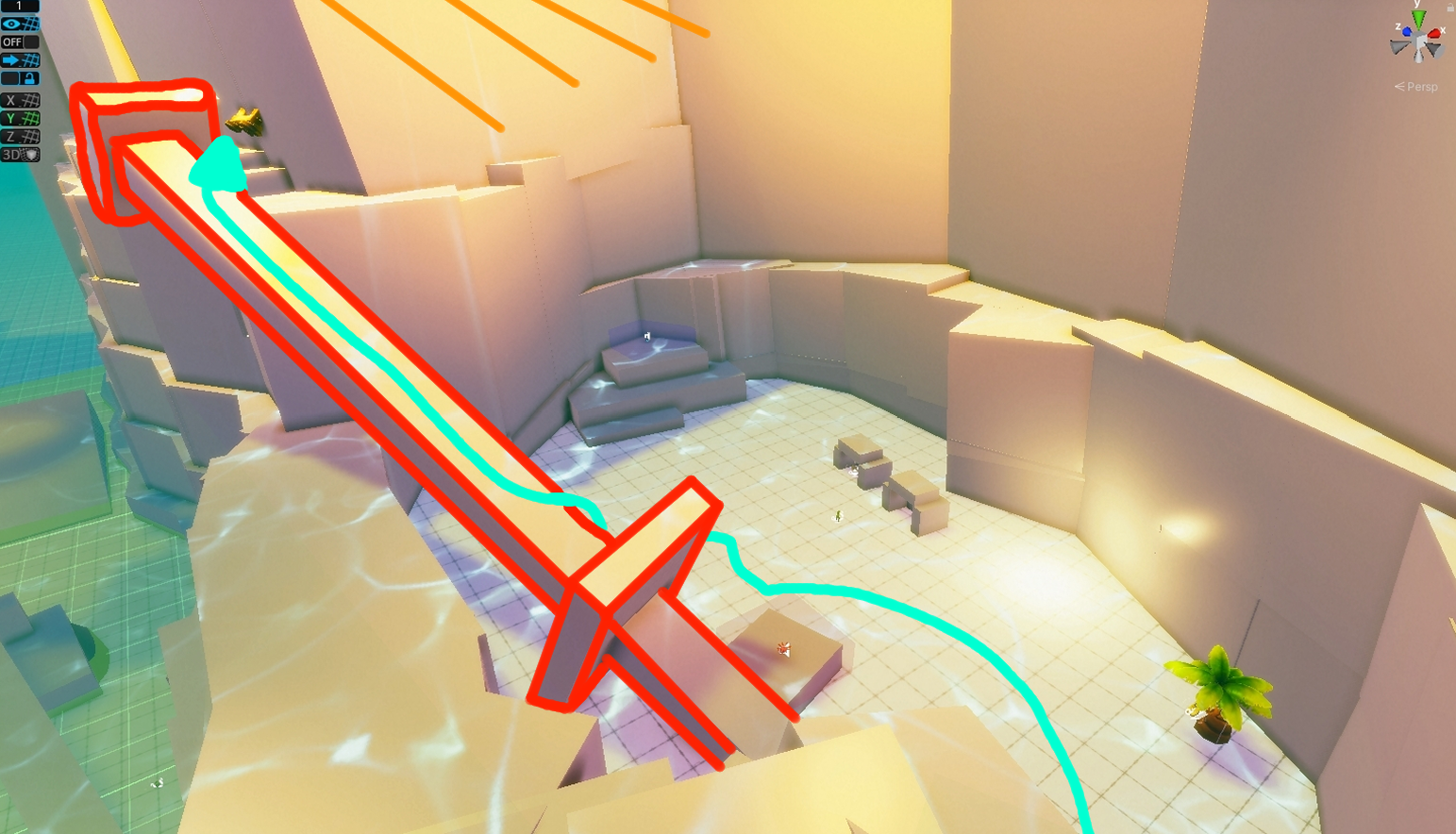
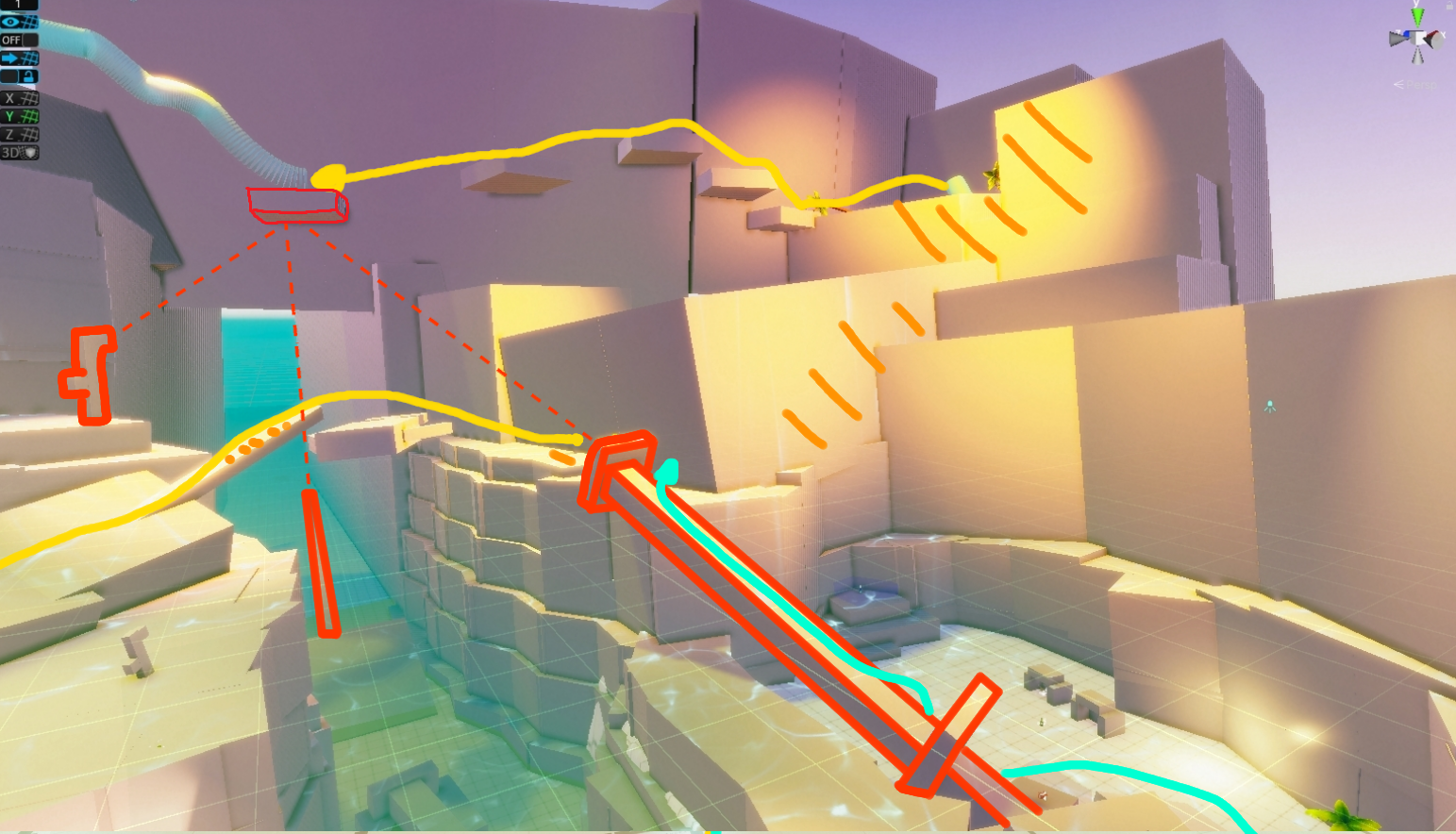
The right shortcut is accessible using a bumper, requiring a crafting phase.
It highlights the core gameplay of Babbles, exploration and crafting.
Both lower paths converge toward the second ship.
After crossing it, the player finishes the level through a platforming sequence using the bumper, leading to the end of the level I designed and toward the continuation of the game.
LEVEL ART :