
Level Design - The Black Death 1347

Information :
The Black Death 1347 is a short game developed with the aim of connecting my level design skills with the historical knowledge of medieval cities acquired during my university studies in History under Céline Perol.
The project takes place in a historically credible setting the 14th century, at the dawn of the Black Death while integrating a fictional layer in which the epidemic is more virulent than it was in reality.
The player takes on the role of an isolated physician whose mission is to escort a wealthy family out of the city (the term “bourgeois” is deliberately avoided in order to prevent any anachronism).
Data :
1
I was alone for this project
6 Hours
UE 5
Game Engine use
Objectives :
My goal with this project was to make the player experience specific emotions, in particular tension and mystery, through claustrophobic scenes set in the narrow streets of a 14th-century medieval city. This heavy atmosphere is then followed by a sense of curiosity, especially during the exploration of a luxurious house, which creates moments of surprise and relief when the player discovers the survivors.
The level concludes with a form of both narrative and spatial resolution, when the player manages to save the family and return to the starting point. The level is designed as a progression in four phases, each driven by a clear narrative and emotional intention. This structure creates constant contrast throughout the experience, generating “wow effects” and making each stage of the level memorable for the player.
Through this project, I aimed to demonstrate my ability to combine historical knowledge with technical level design skills. I designed the environment as a true narrative tool, capable of guiding the player in an intuitive and invisible way.
My objective was to maintain a clear structure and a professional, rigorous design approach, while ensuring strong immersion, where level design drives the narrative without ever constraining it.
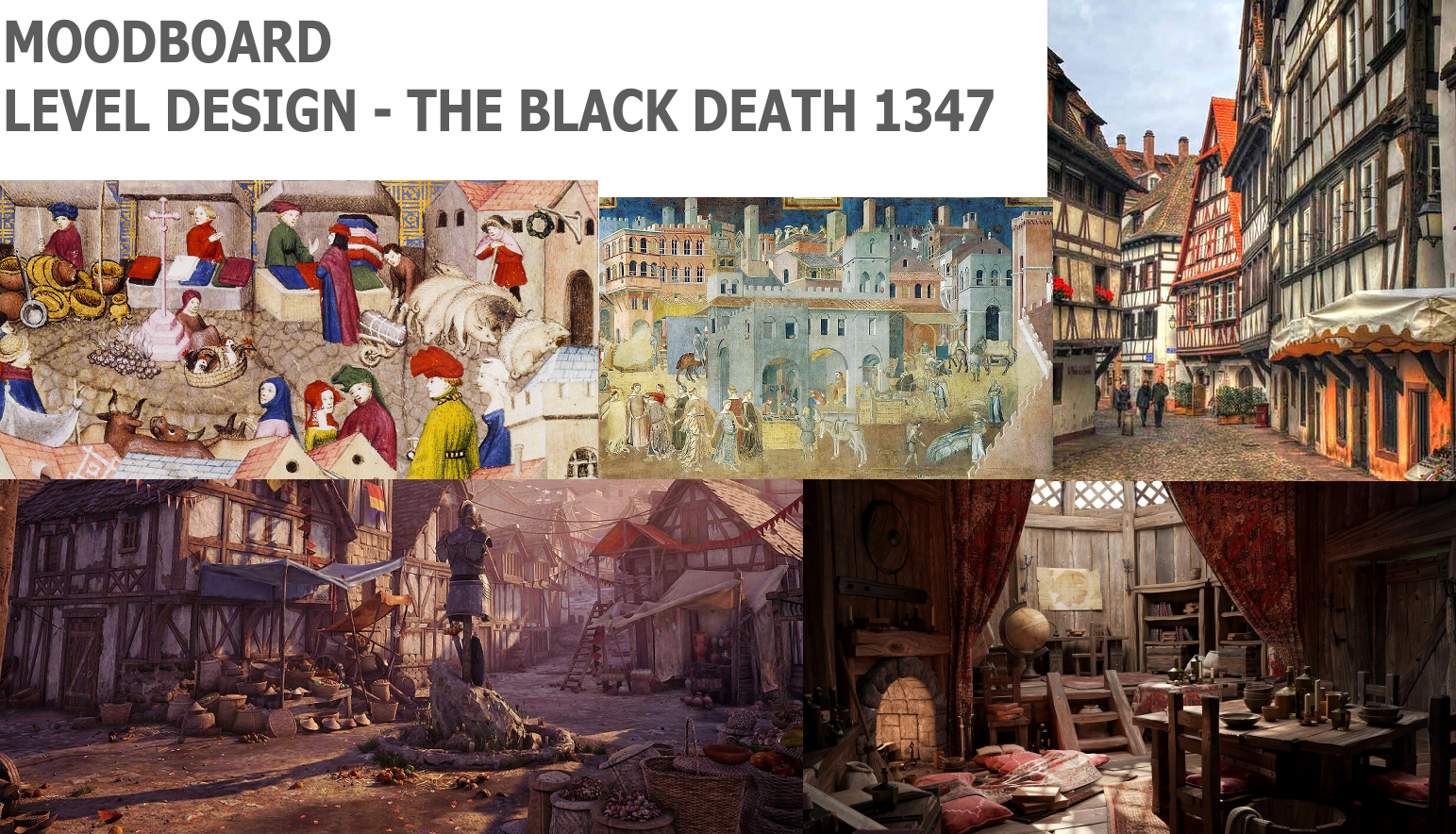
Here is the moodboard I created to support my inspiration and gather visual references:
LEVEL DESIGN :
Layout 2D :
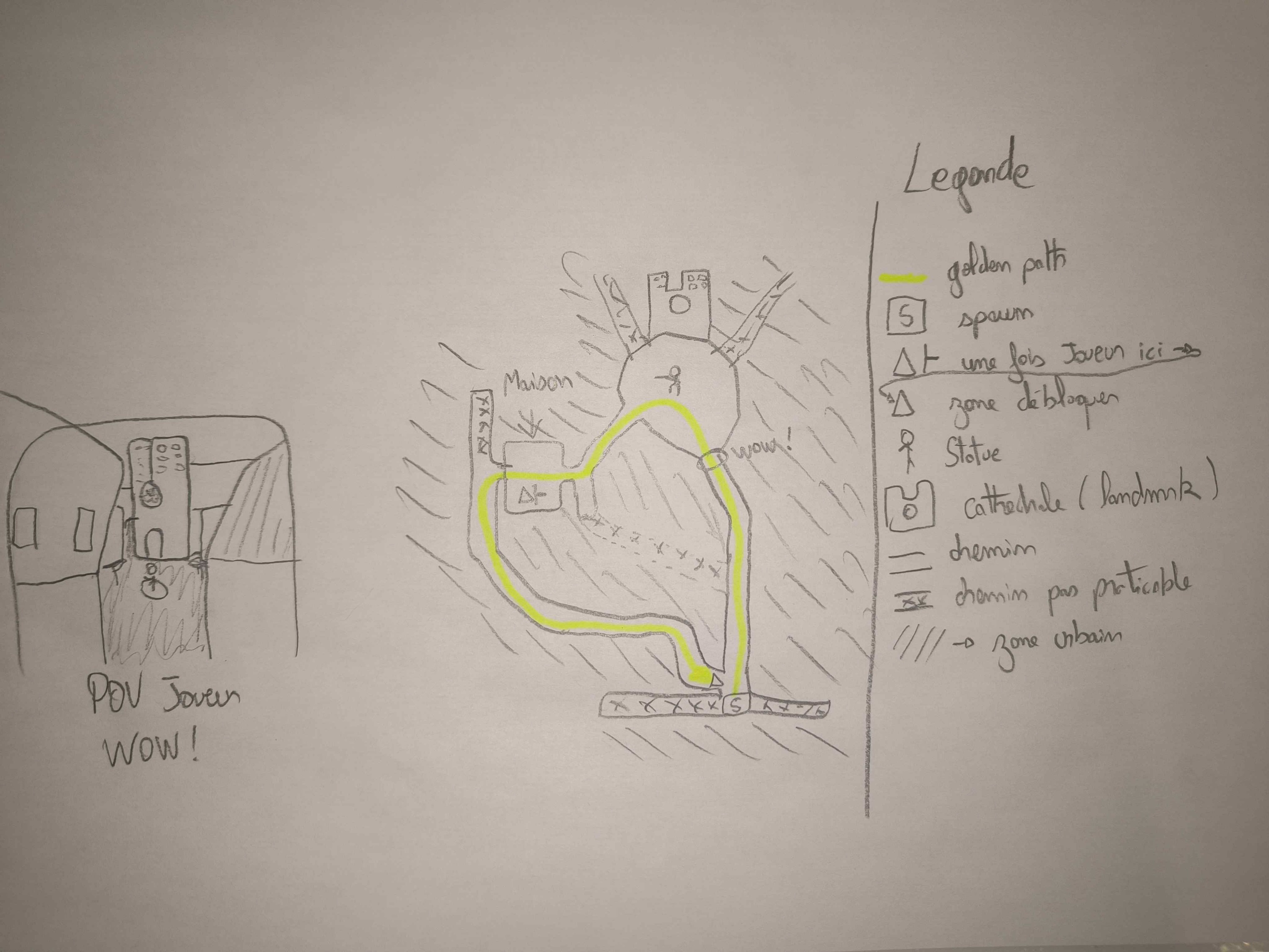
Obviously, before working in the engine, it is essential for me to structure my ideas on paper.
This allows me to evaluate whether the concepts work, but also, in the context of teamwork, to be able to present and explain my work before production. This step also helps save time during the creation of the blockout.
Timeline :
Step 01 :
Discovery of the first "zone"
The level opens with a strong, information-rich vista where the cathedral landmark clearly establishes the player’s direction,
while the narrow street naturally guides movement and reinforces the atmosphere.
Émotion(s): Mystery, Confinement
Step 02 :
The abandoned market
At the end of the narrow passage, the player is revealed a strong “wow moment” with the central square and its abandoned market.
The arrangement of goods naturally guides the player along the intended path, while the statue and the sword strengthen the atmosphere and credibility of the location, and primarily act as a directional landmark.
In the background, the mountain reinforces this guidance, its slope naturally draws the player’s gaze downward, toward the intended golden path.
Hay bales clearly block forbidden areas and subtly push the player toward the correct route.
The presence of additional corpses further questions the player about the nature of their presence in this place.
Emotion(s): Awe, Curiosity, Unease, First “wow effect”,
Step 03 :
The House
Inside the house, the player discovers that three characters are still alive.
Approaching them reveals an interaction that allows the player to save them, clearly establishing the main objective.
Emotion(s): Clarity, Relief, Surprise
Step 04 :
Objectives completed
After leaving the house, the player notices that the path previously blocked by the other carriage at the beginning of the level is now accessible.
This newly opened route creates a shortcut back to the spawn area, avoiding the original path and reinforcing the player’s understanding of the level’s spatial layout.
Emotion(s): Satisfaction, Spatial Awareness, Accomplishment
Level Design Intention :
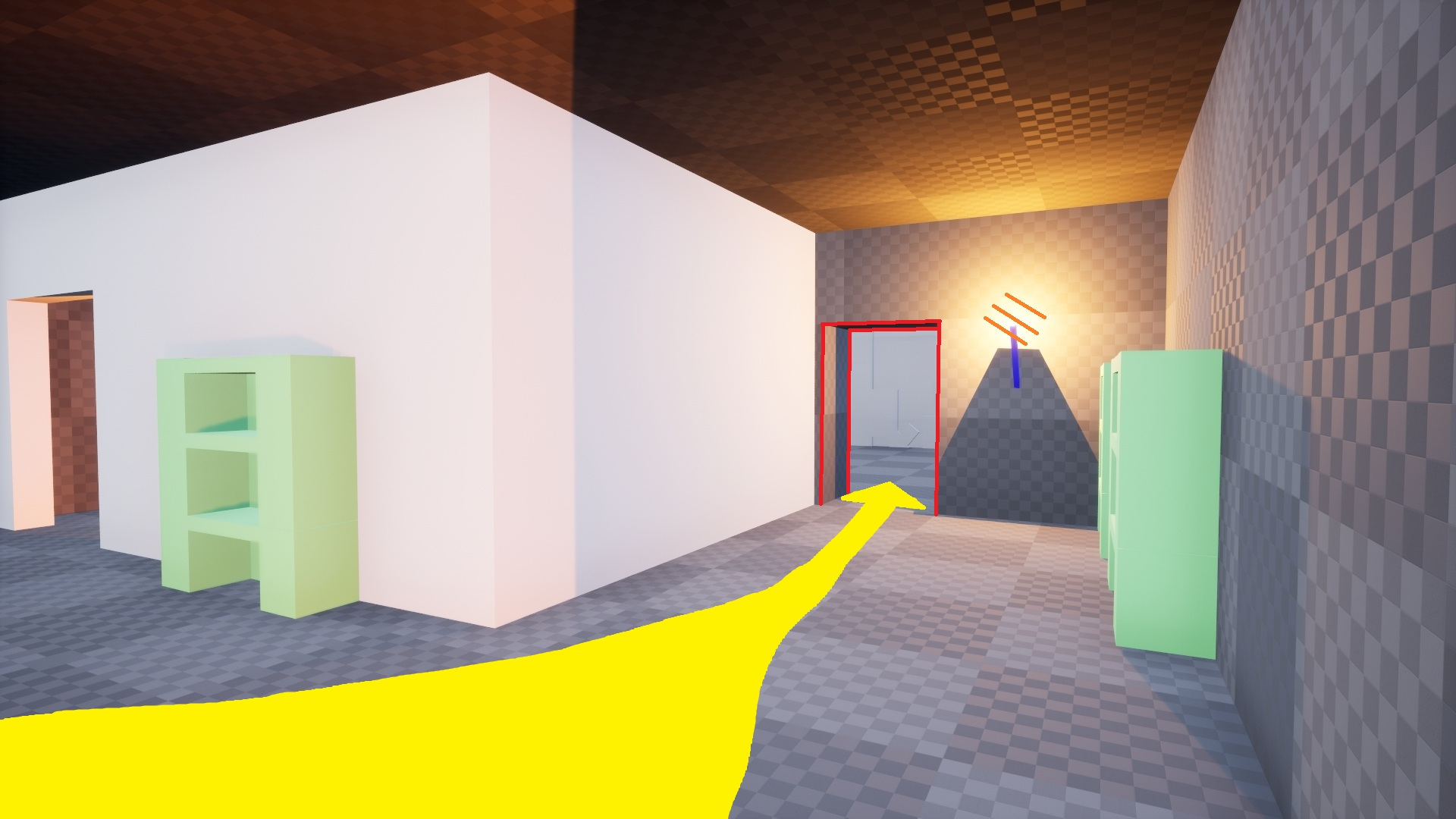
RED = Leading Lines / Affordance / Highlight YELLOW = Golden Path ORANGE = Lightning
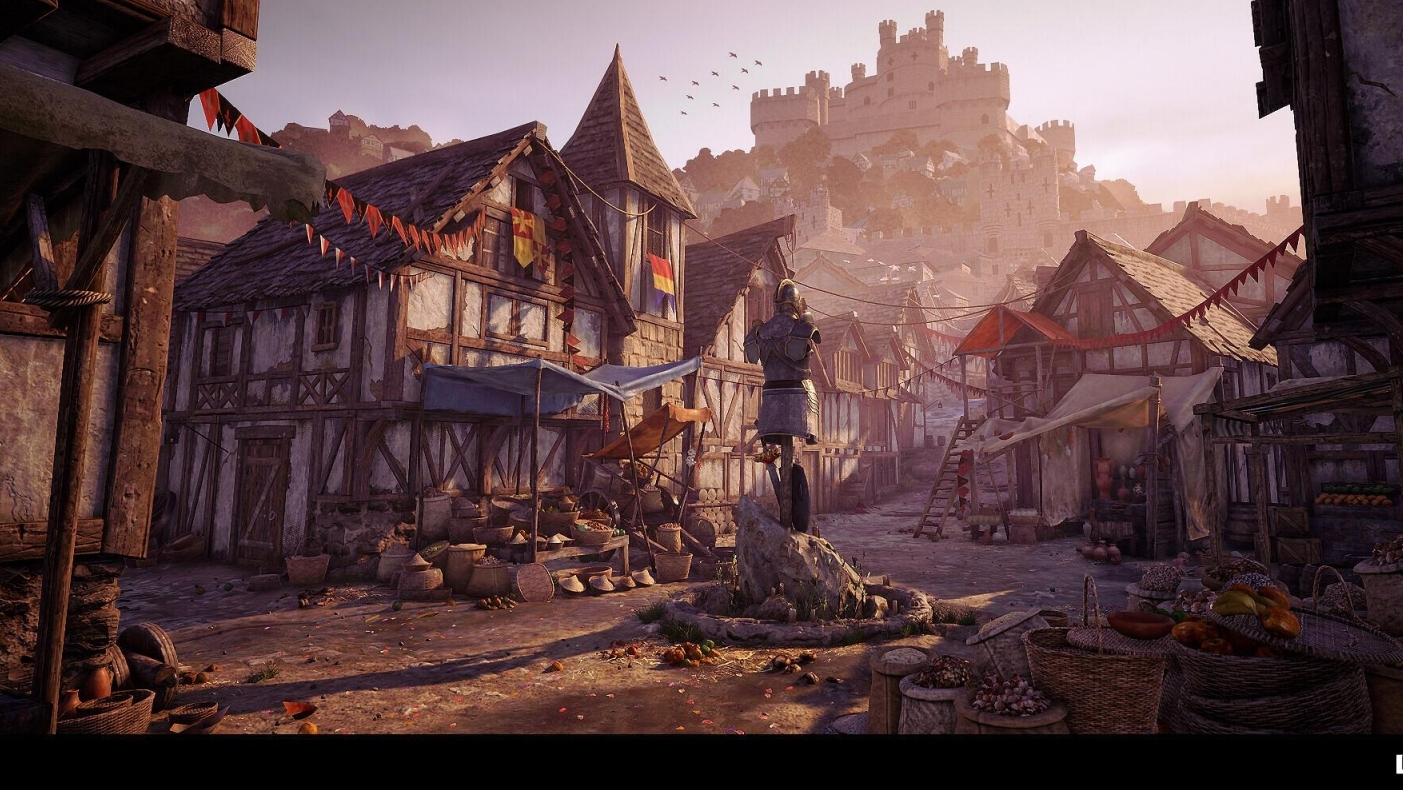
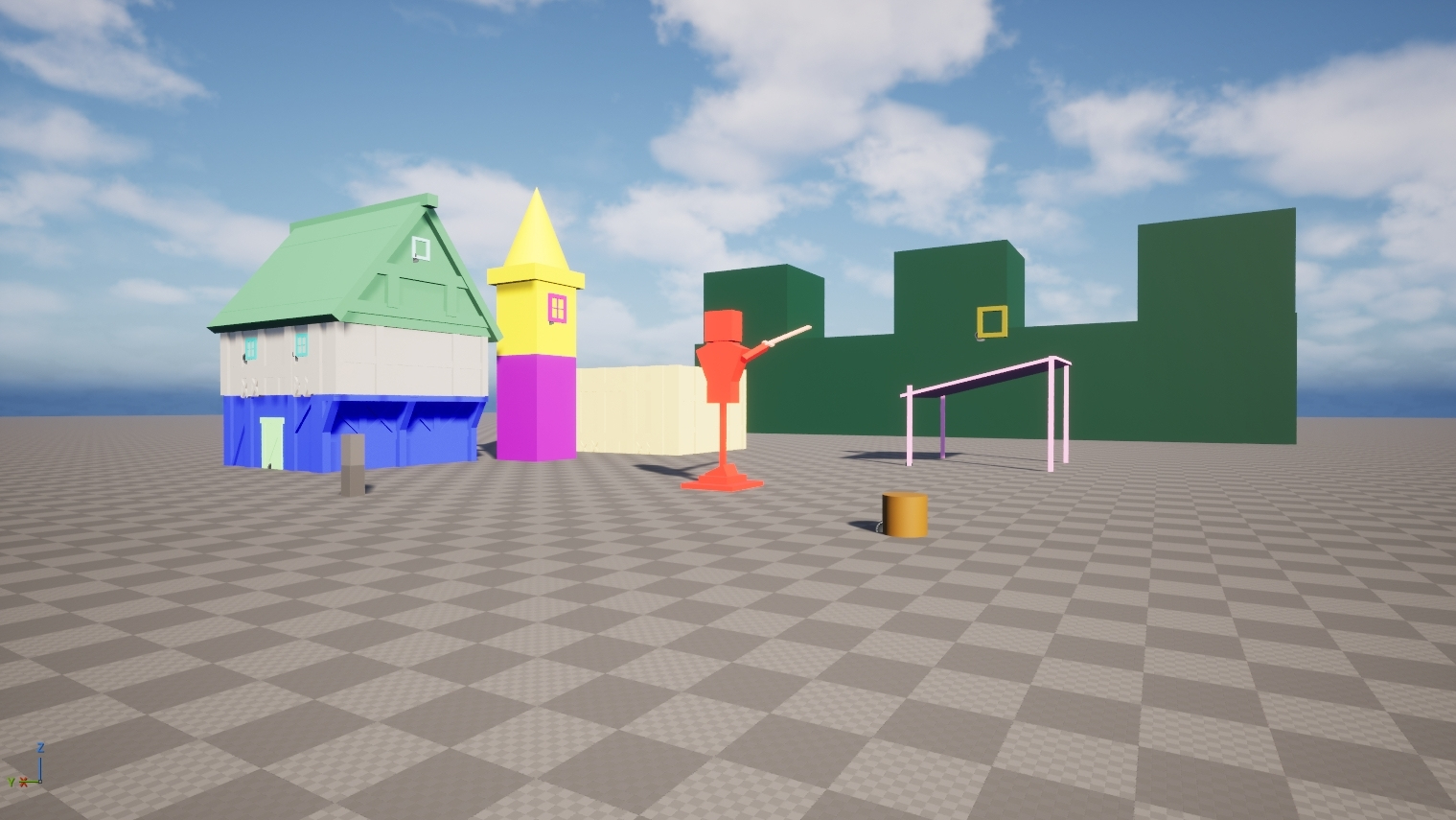
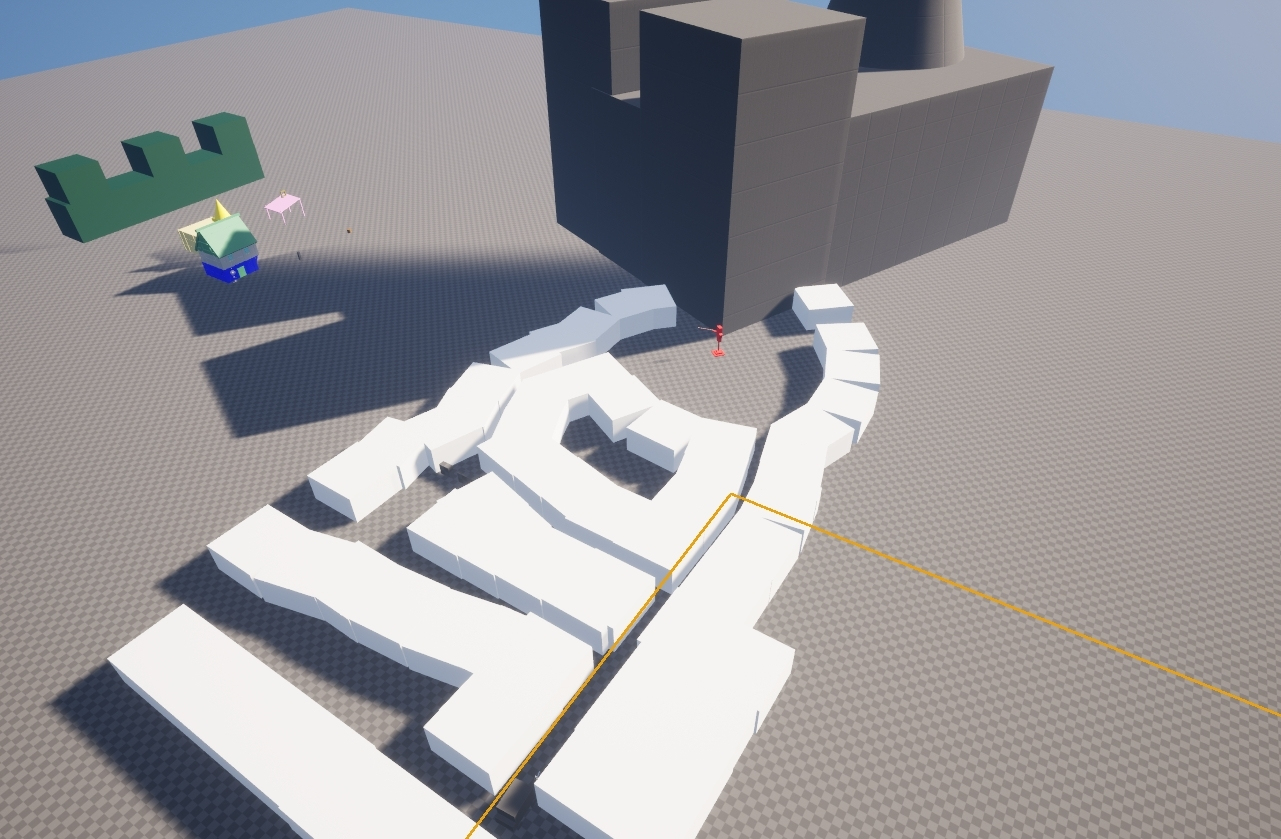
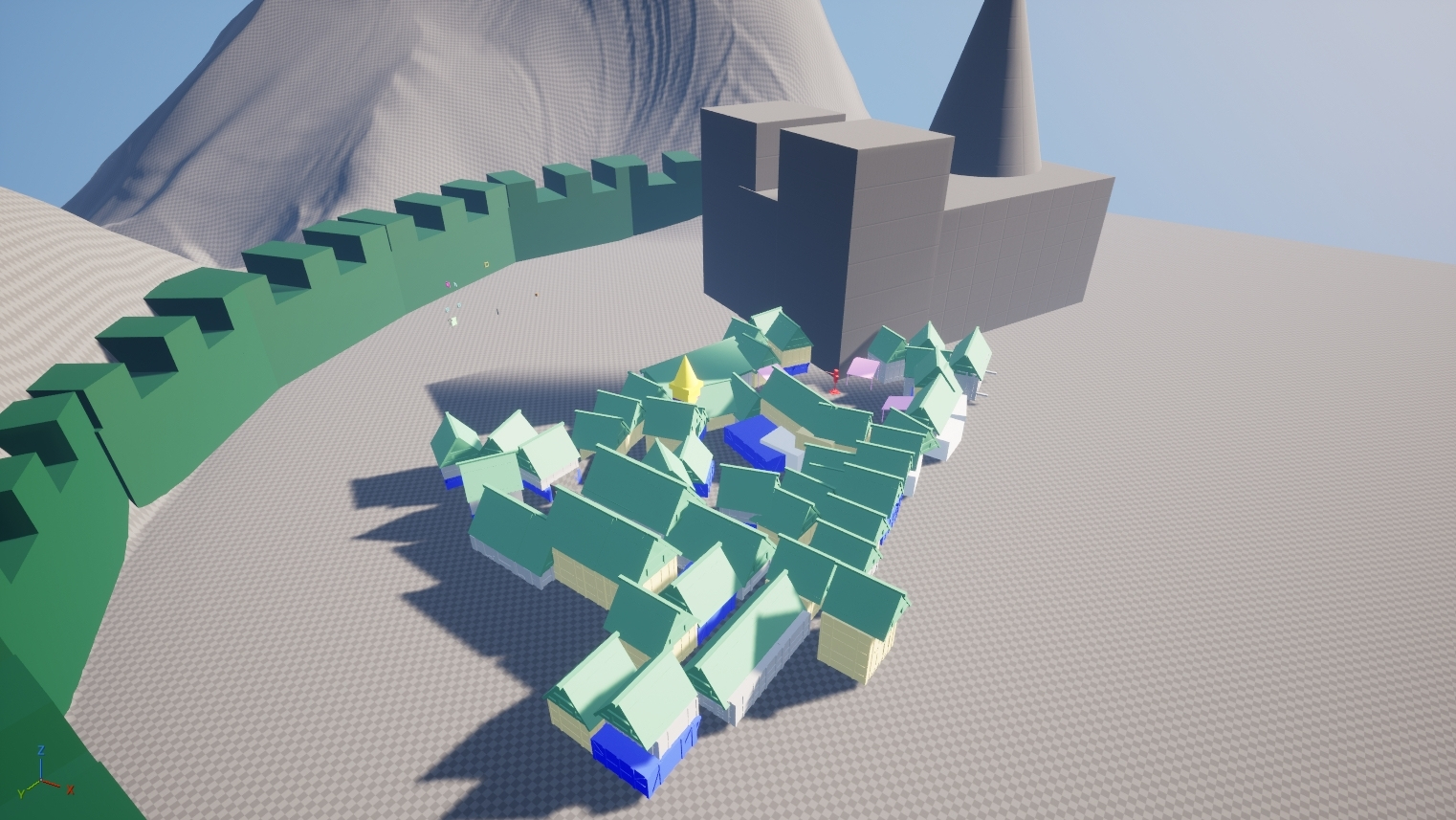
First, the elements from the concept art were reproduced in blockout in order to integrate them directly into the level. This approach makes the level’s readability clearer.
In a second step, using very simple shapes, the overall structure of the level was defined. Once the flow was validated and considered satisfactory, the models were used to make the blockout more readable and easier to understand.
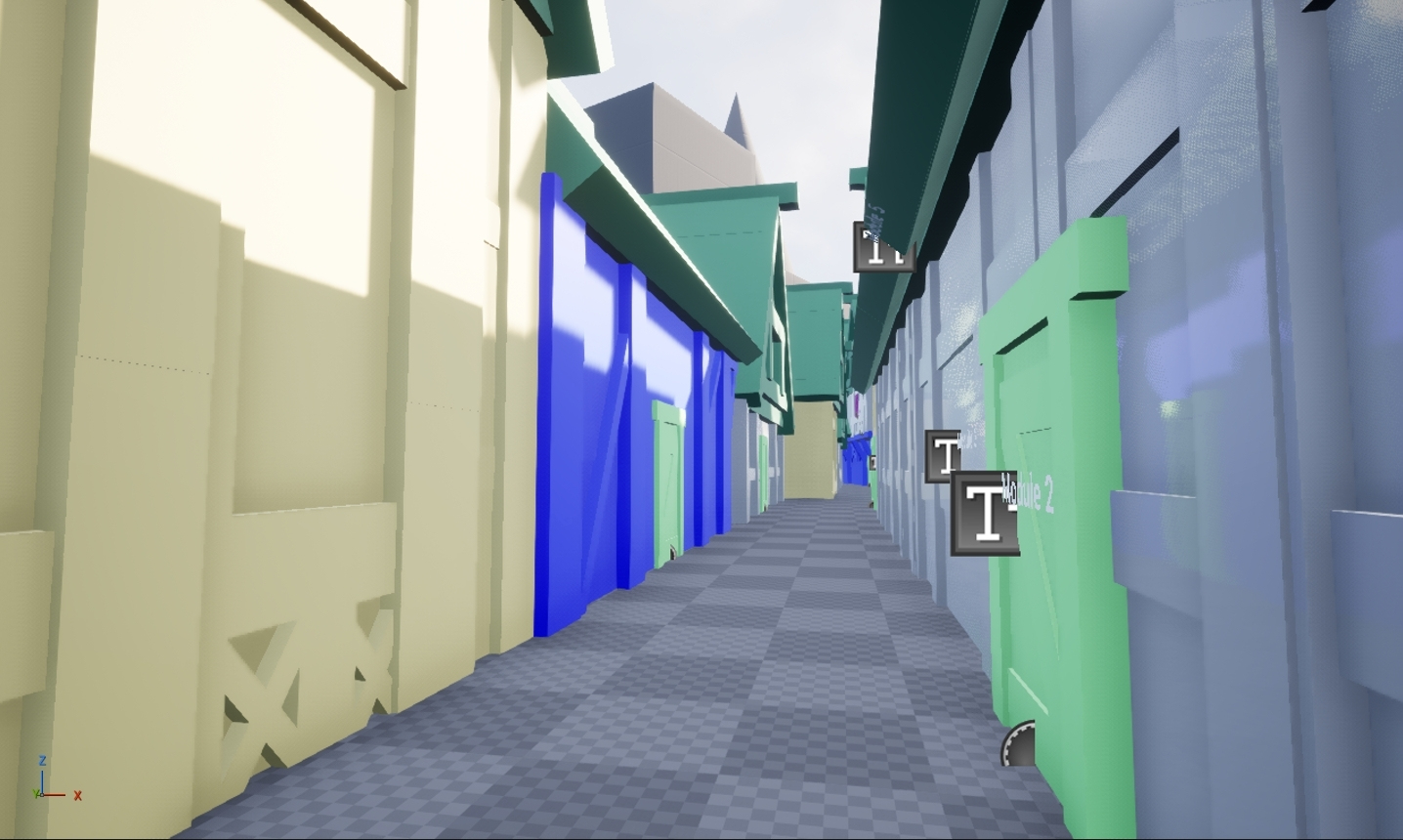
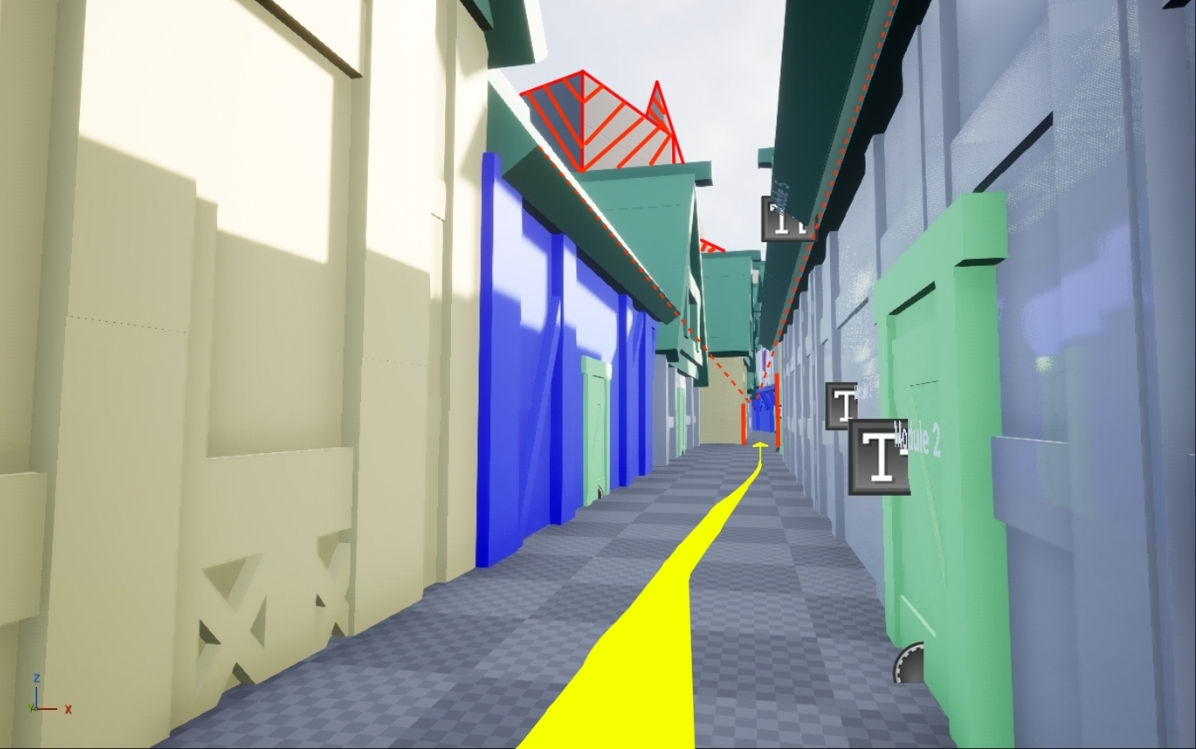
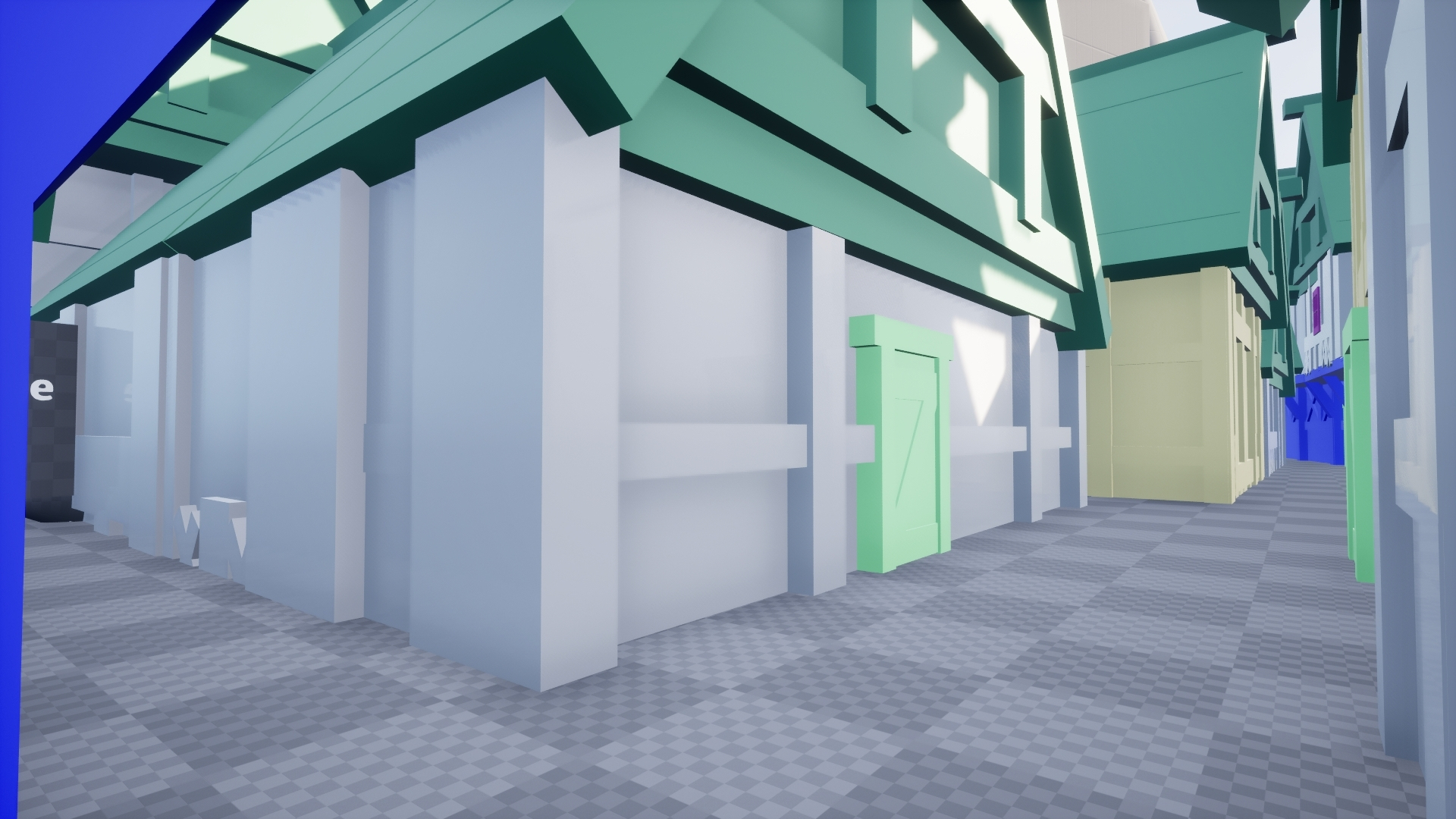
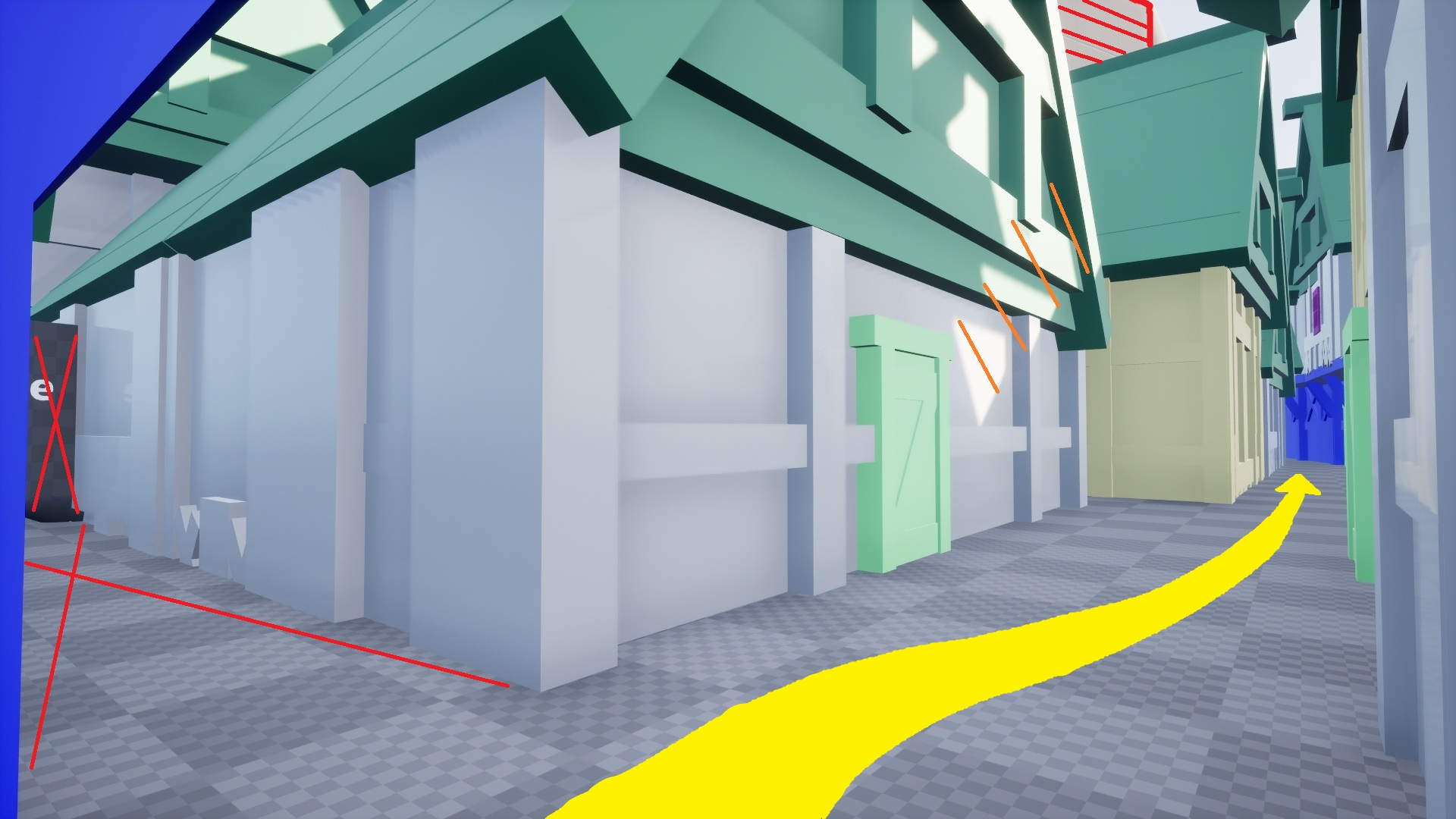
The player can observe the cathedral landmark, which clearly indicates the direction to follow, while the narrowness of the street naturally reinforces the intended path.
During their progression, the player discovers a carriage blocking the path. This staging is intended to immediately raise a question. What is on the other side?
The darkness of the alley clearly indicates that the player should not go this way, but instead move toward the lit area and the route identified earlier.
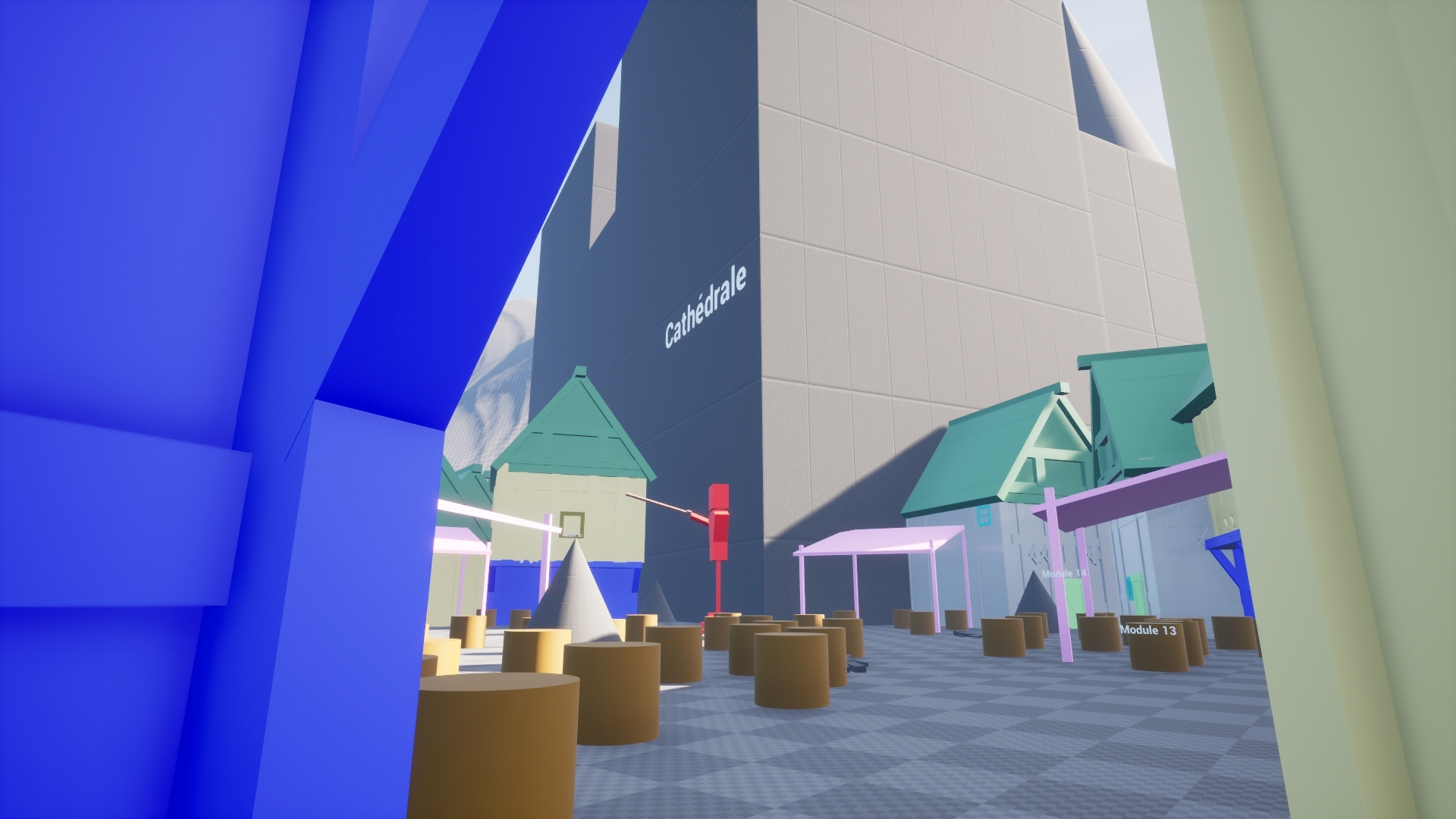
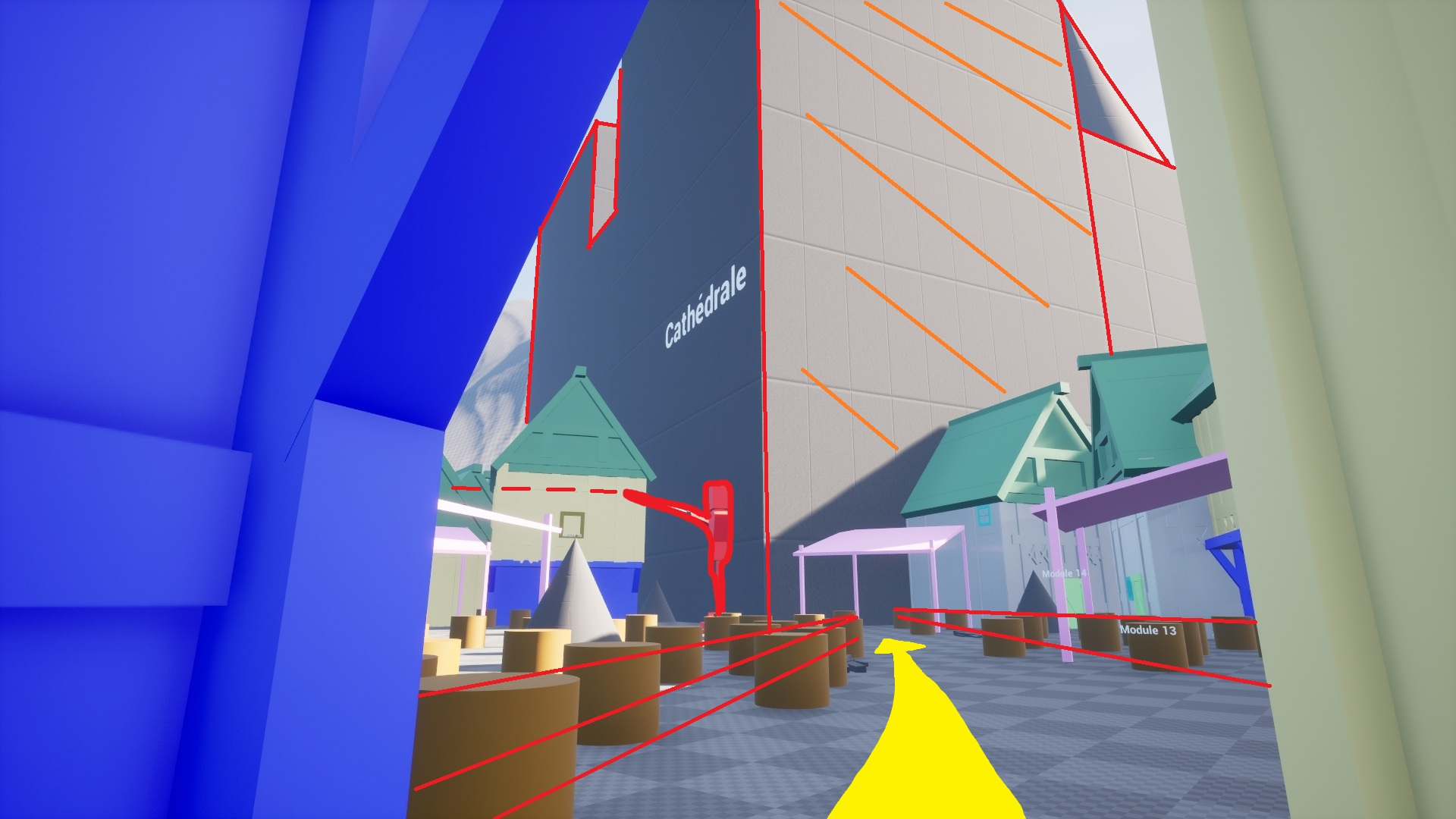
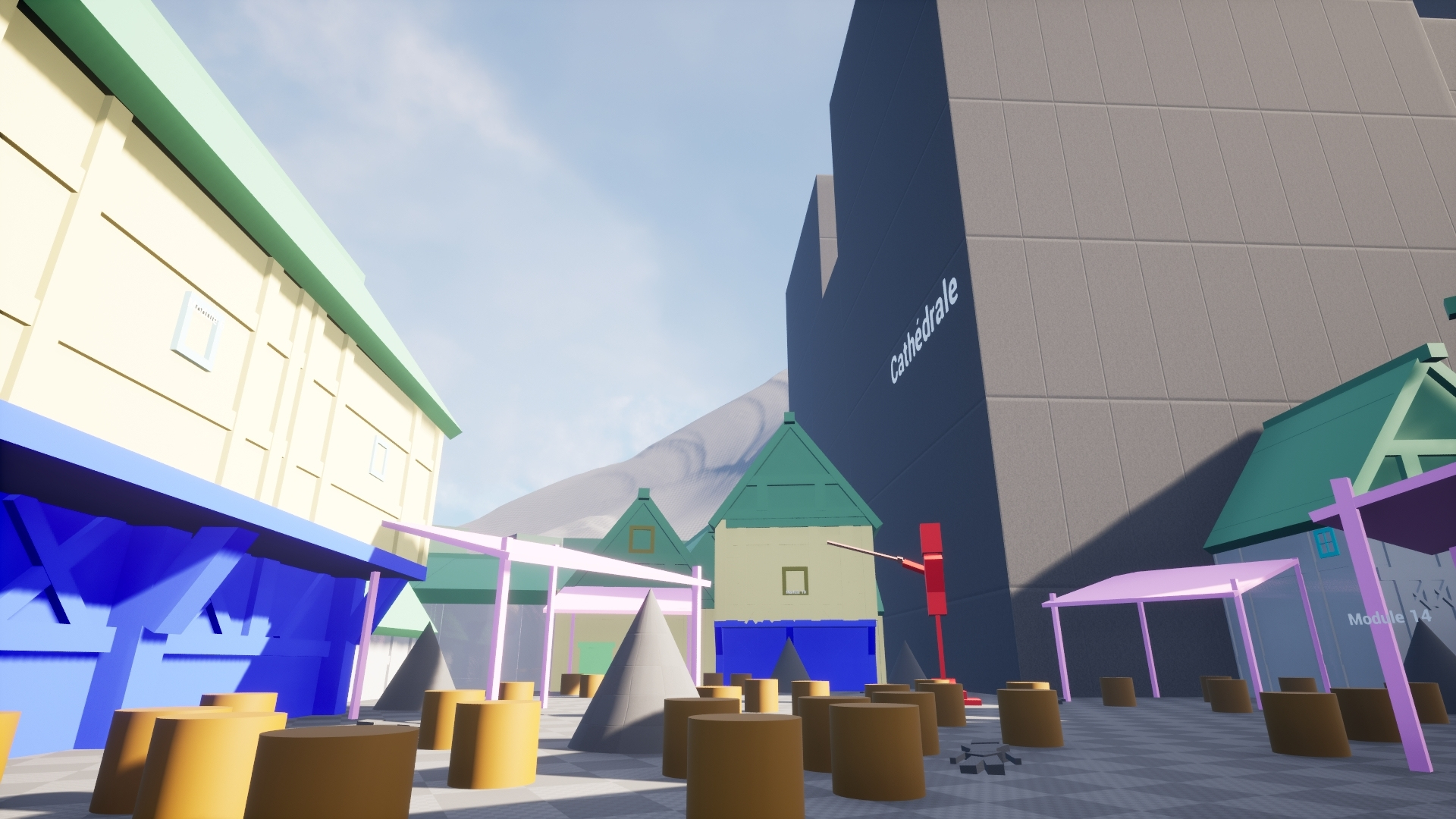
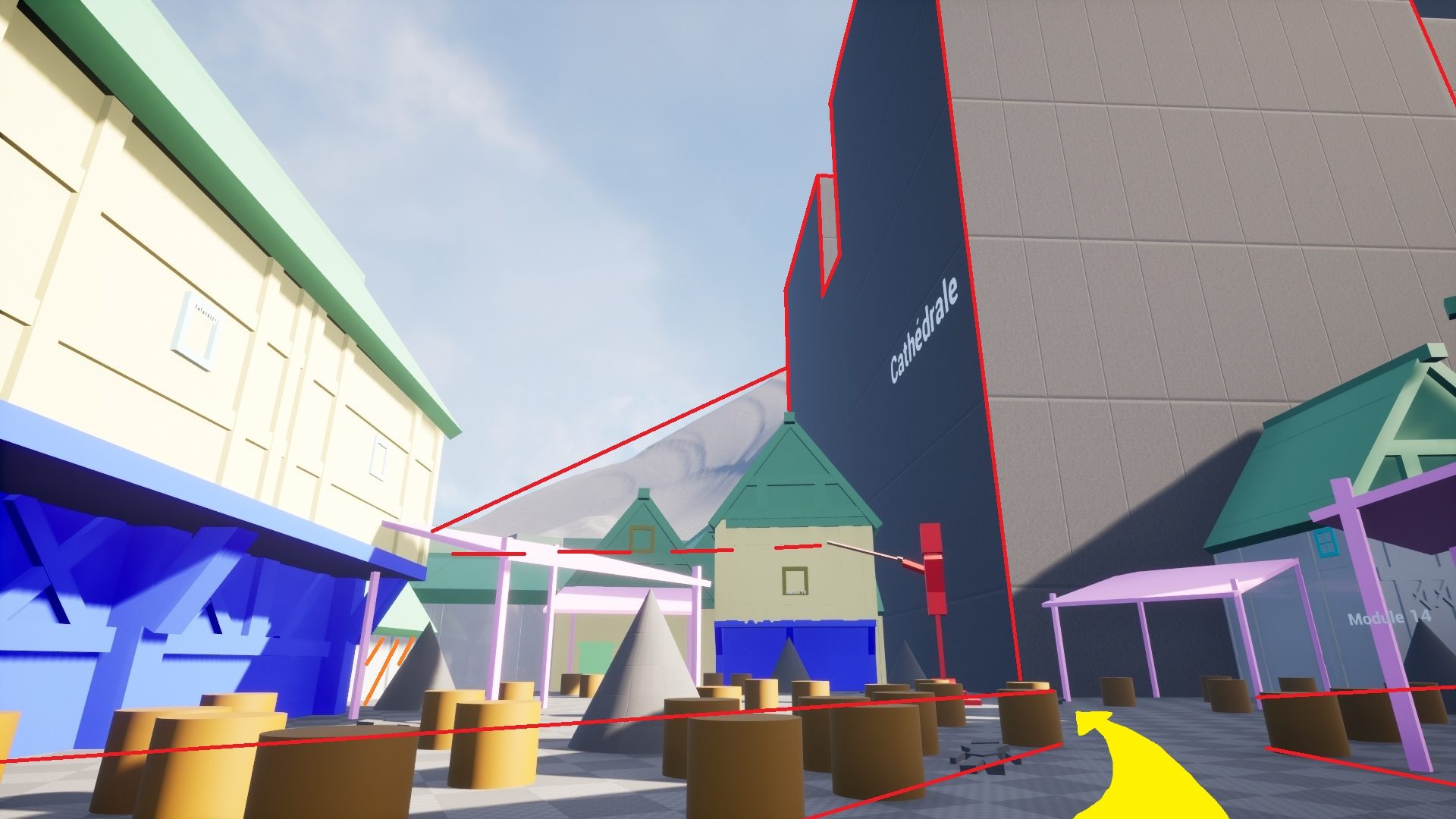
At the end of this narrow passage, the player discovers a real “wow effect” with the opening onto the central square, where an abandoned market is located.
The mountain in the background extends this guiding principle: its slope naturally directs the player’s gaze downward, toward the direction intended by the golden path.
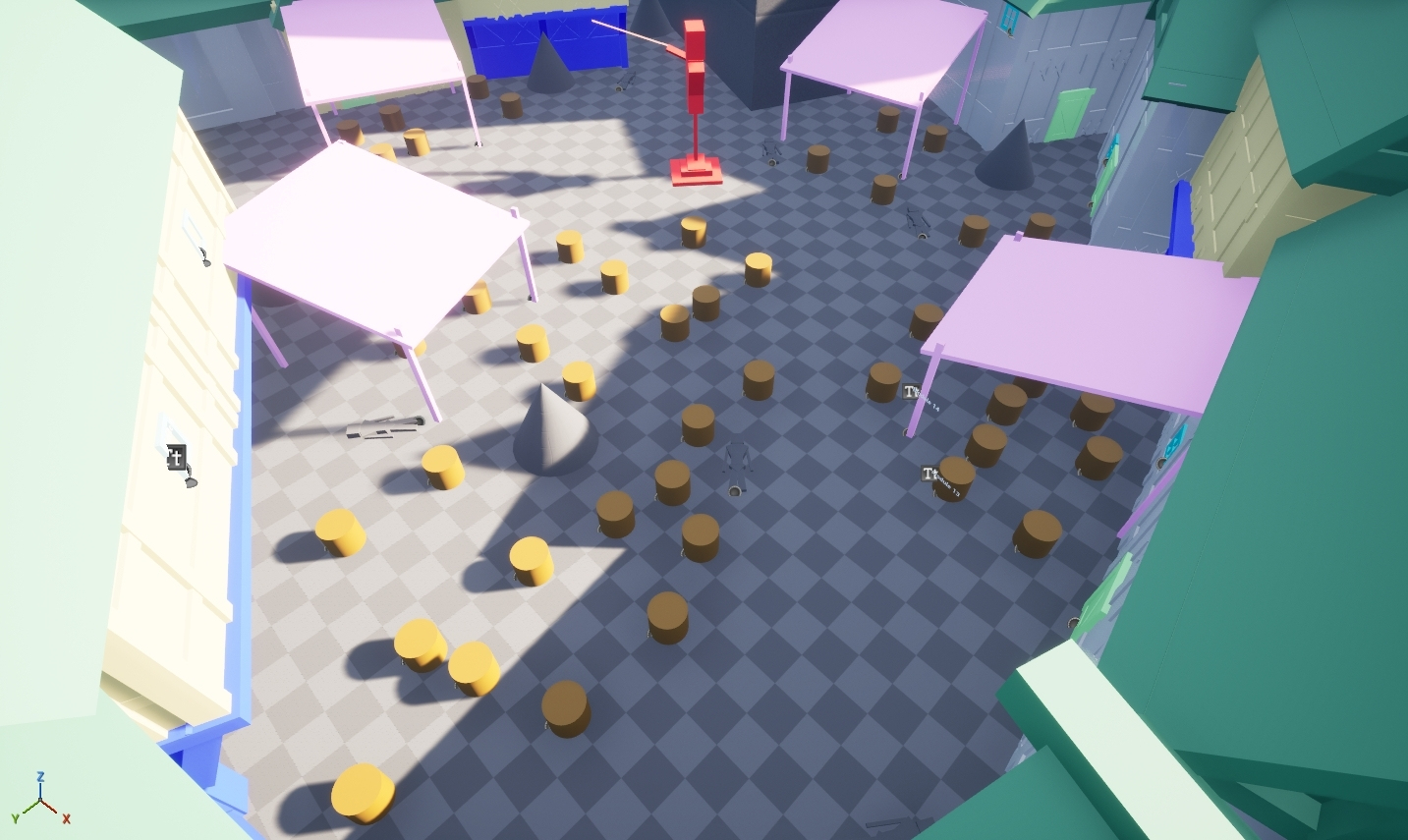
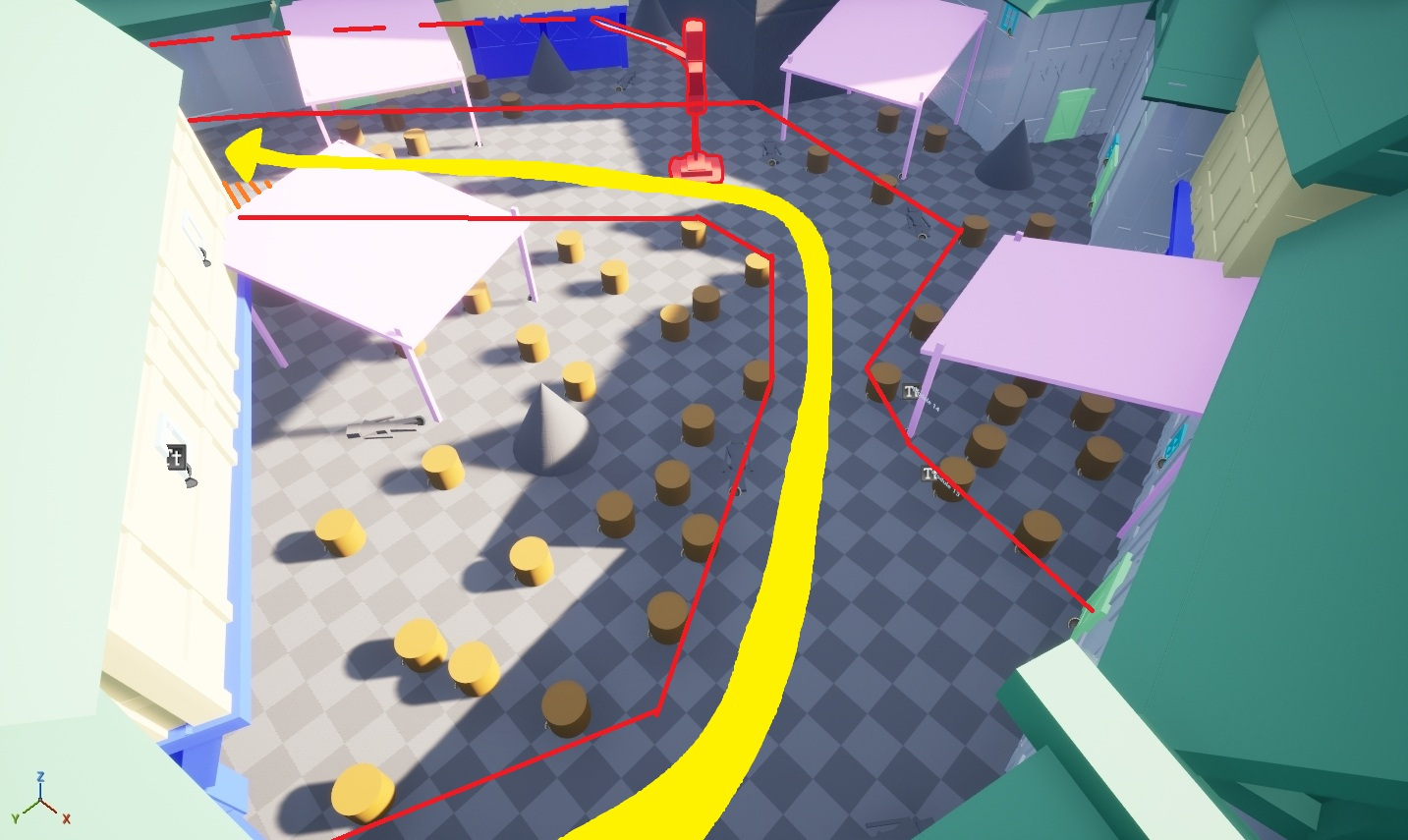
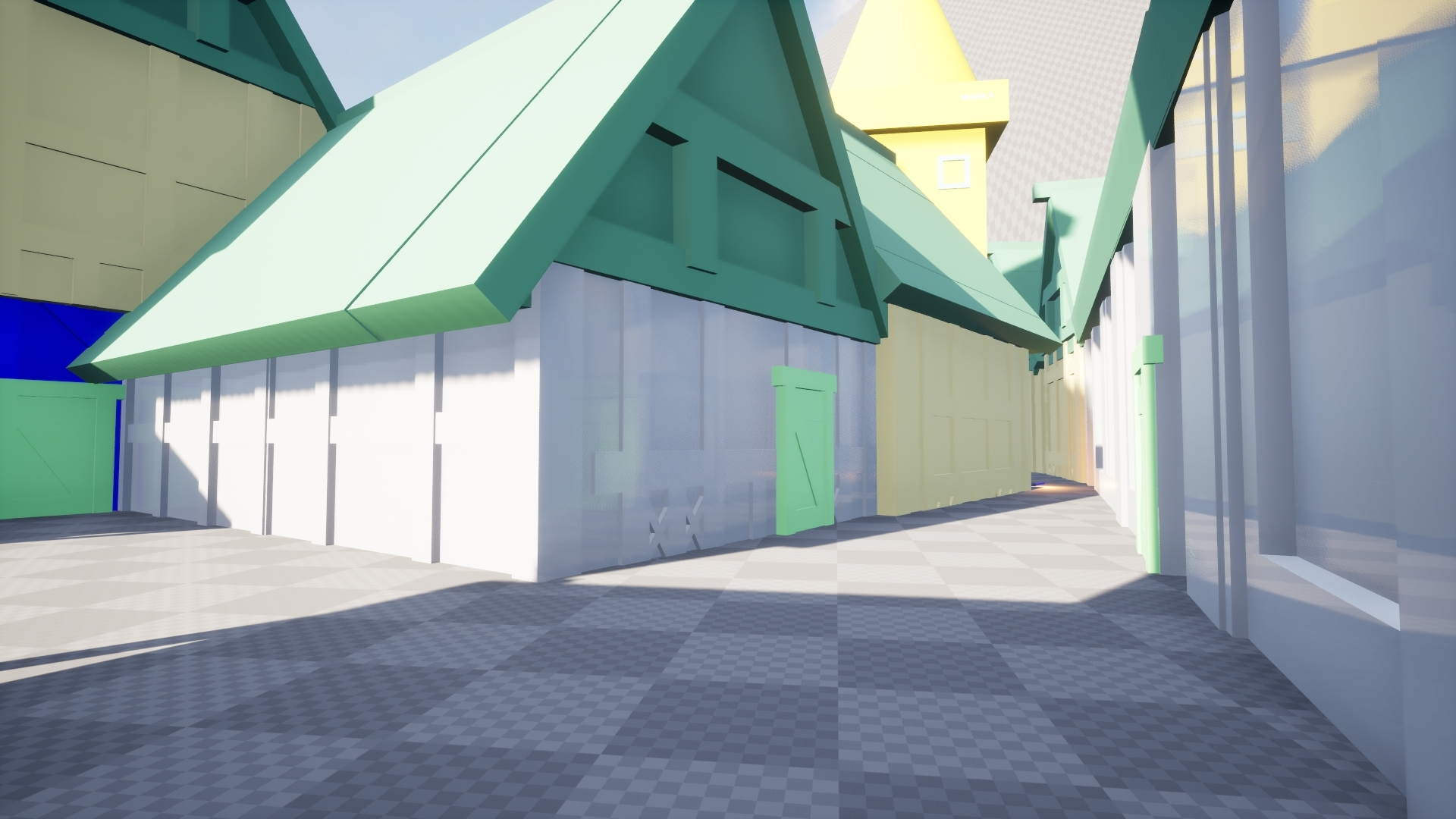
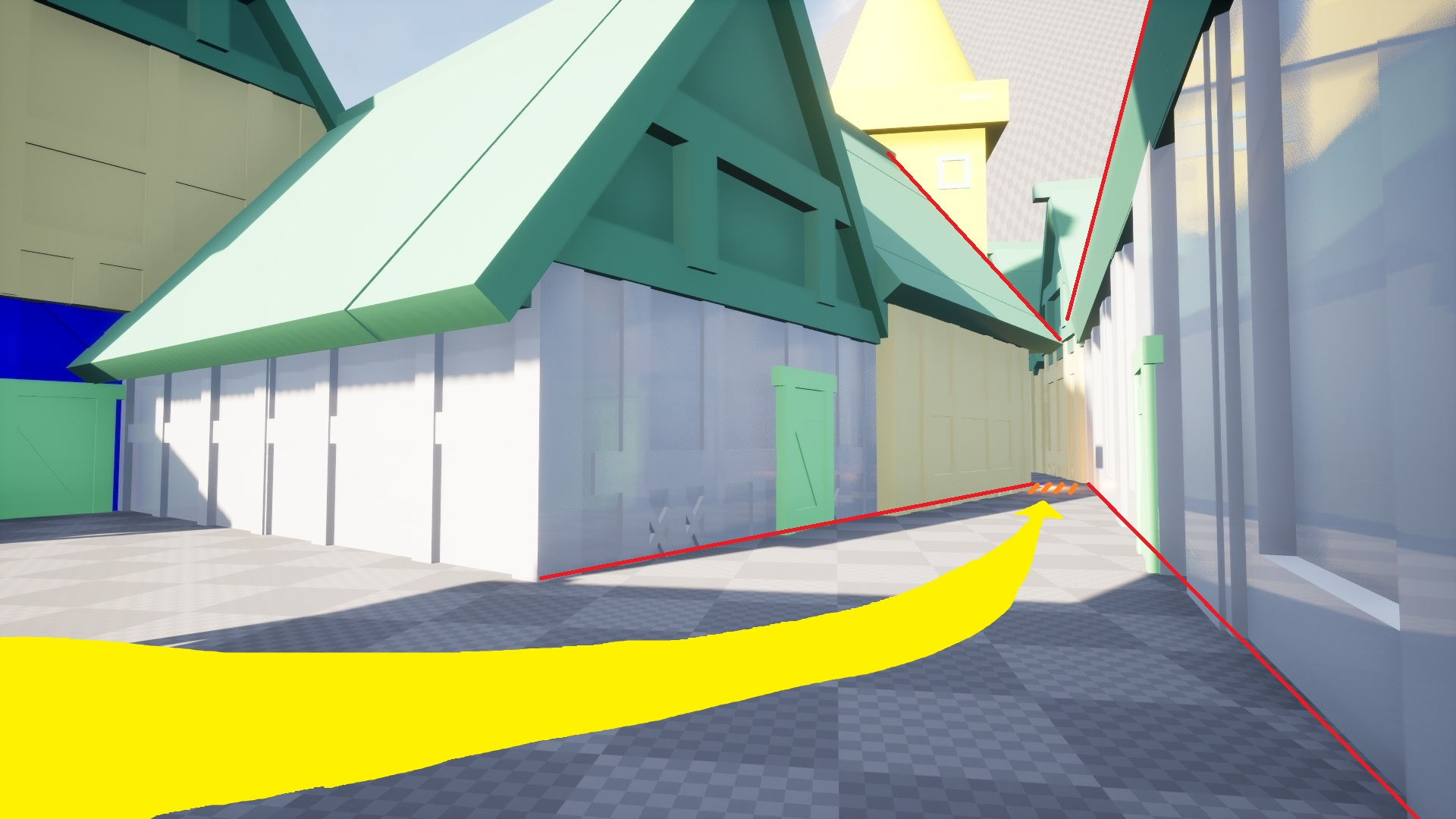
The goods naturally guide the player toward the intended path. The statue and the sword contribute to the atmosphere and the credibility of the location, while primarily serving as a directional landmark indicating the progression to follow.
Once on the main path, the mountains in the background continue to guide the player by indicating the direction to follow.
This guidance is reinforced by the appearance of a new landmark, the yellow tower, as well as by the presence of a light source directed toward the path the player must take.
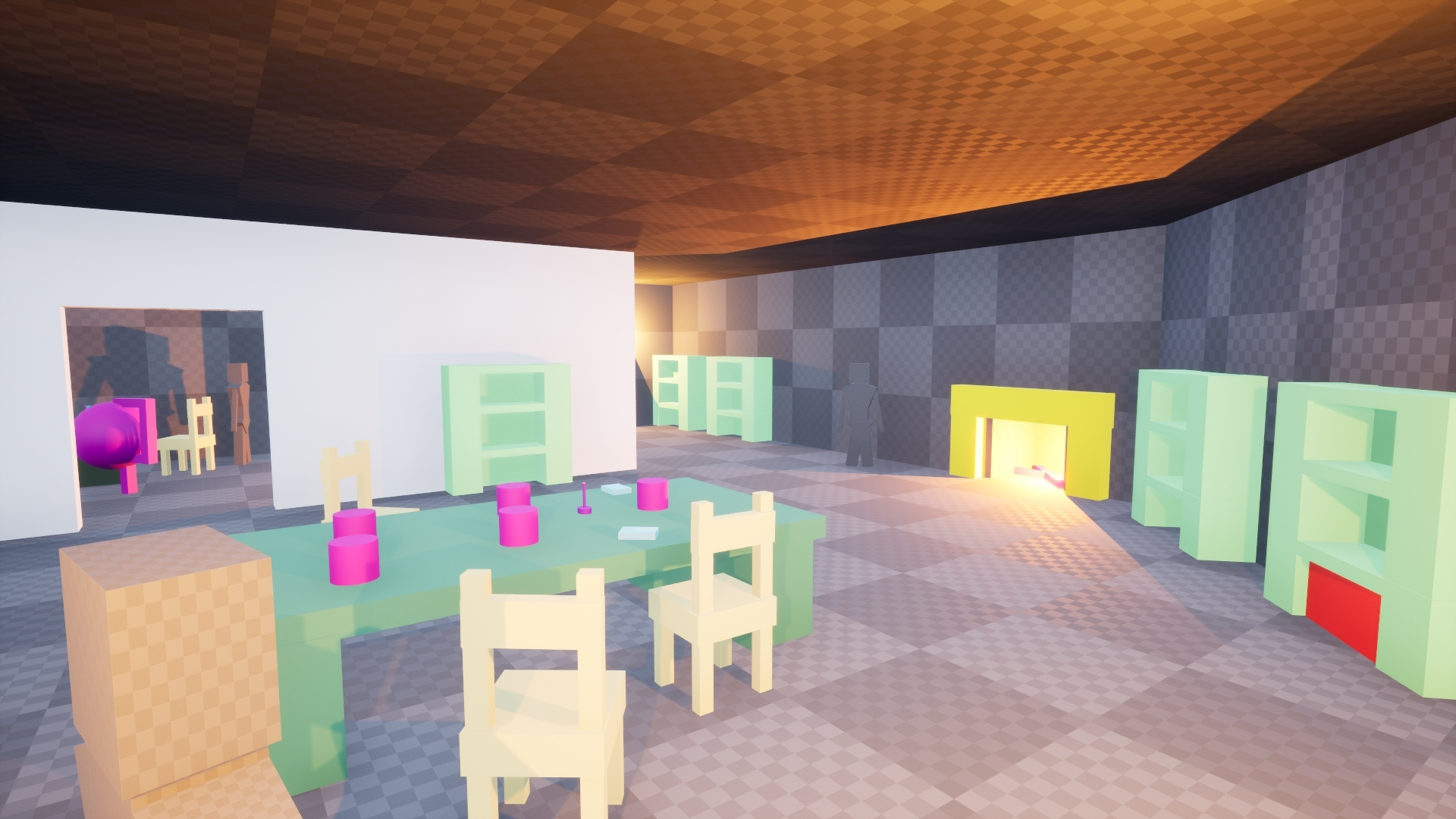
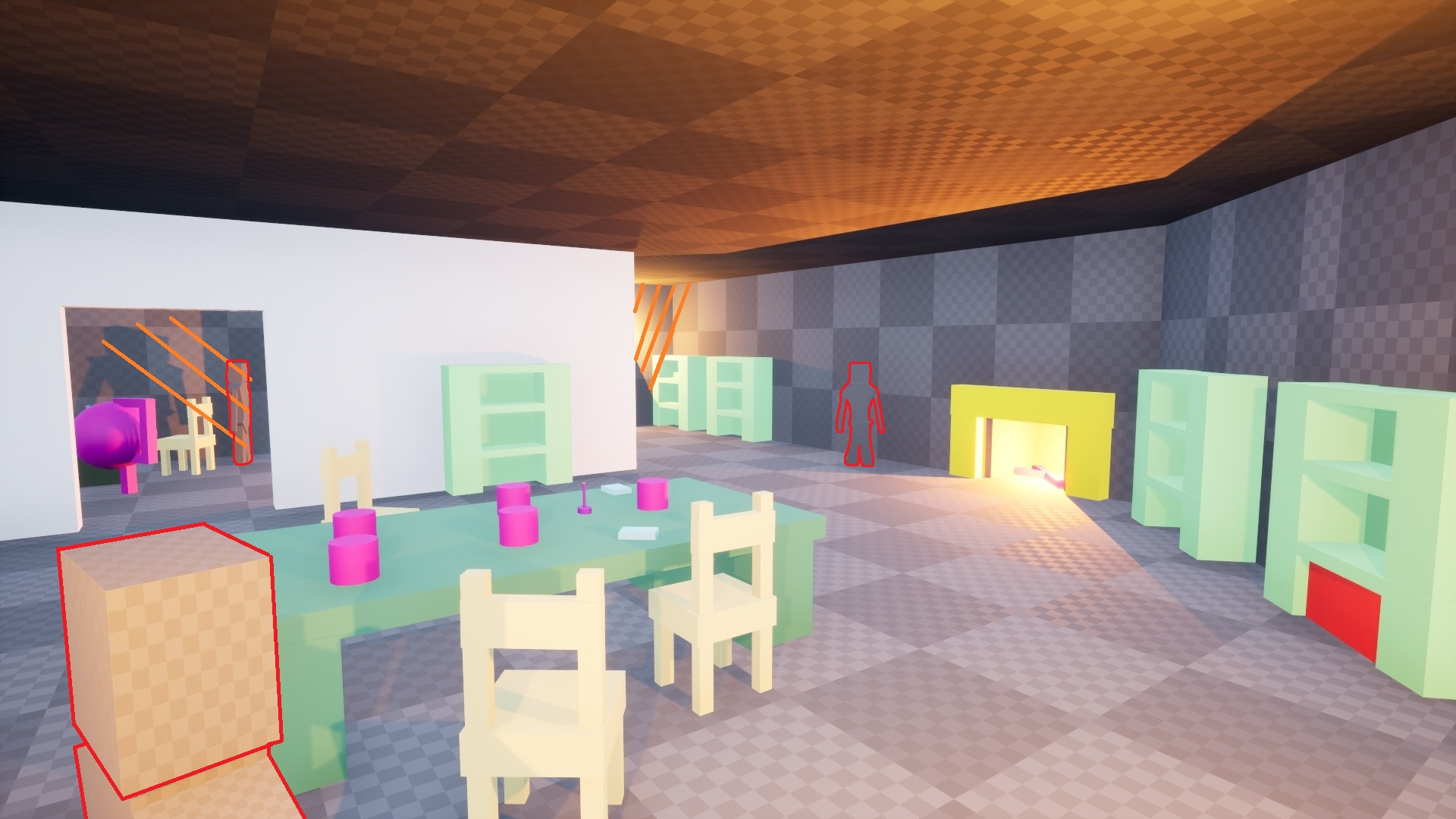
Once inside the house, the player discovers that three characters are still alive. By approaching them, an interaction allows the player to save them, which explicitly clarifies the main objective.
The player also notices that the house is particularly luxurious, notably thanks to the presence of two fireplaces and books.
These elements of environmental storytelling suggest that they are not ordinary survivors, but a wealthy family, providing social and narrative context to the player’s action, the player is not saving just anyone.
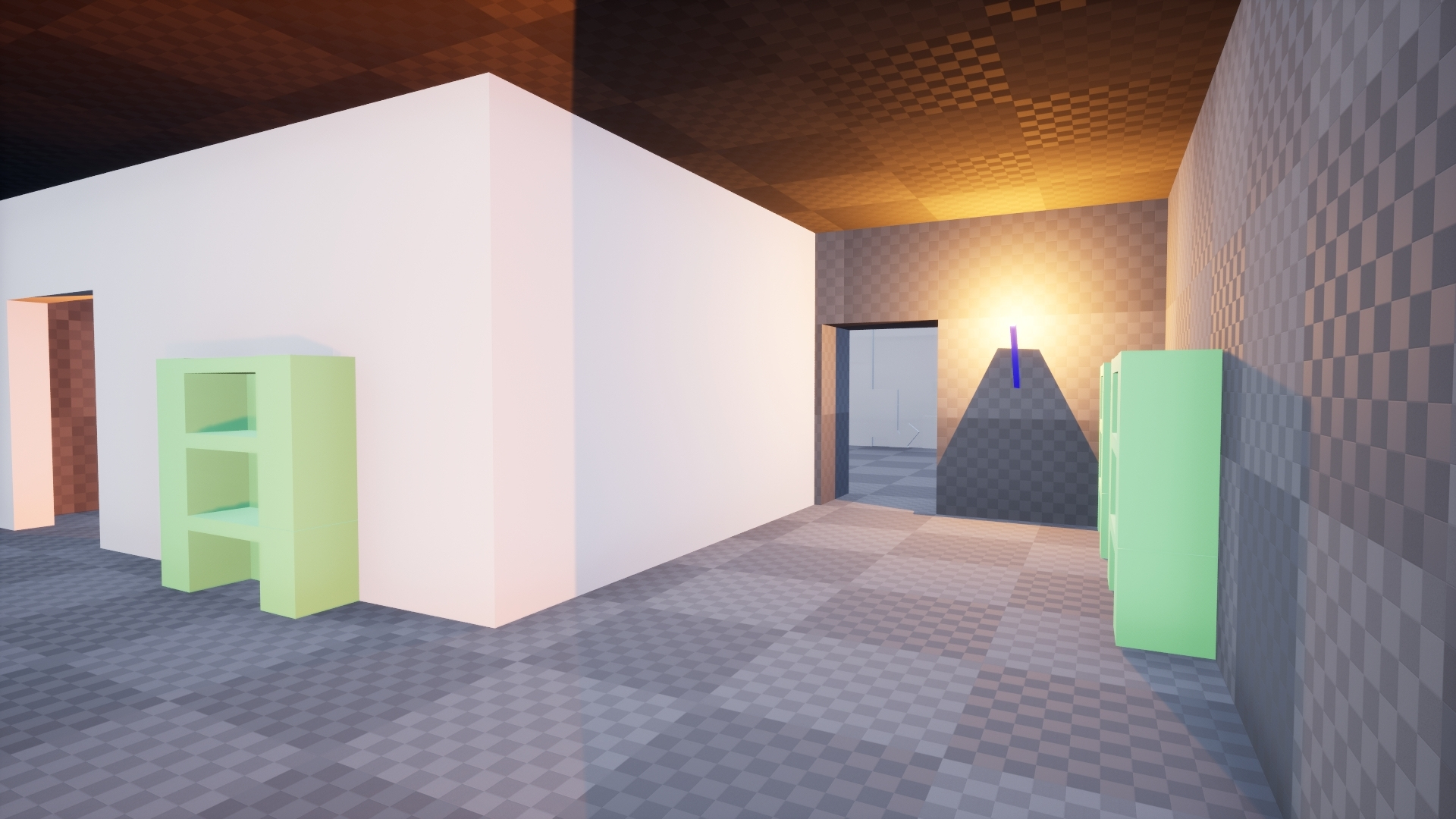
Once the three characters have been saved, the door located at the back of the house, which was initially closed, opens. This opening materializes the player’s progression and unlocks access to a new path.
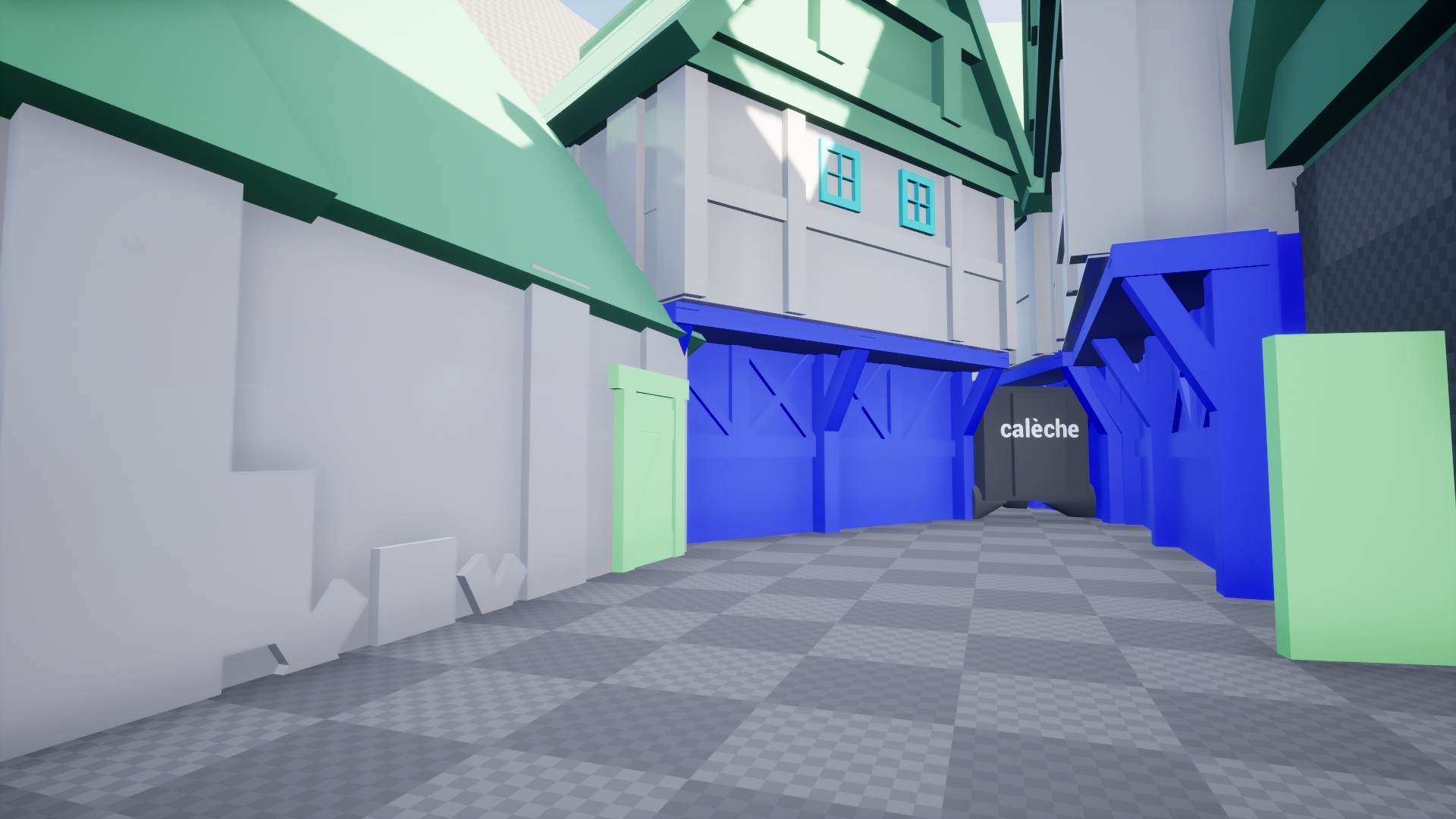
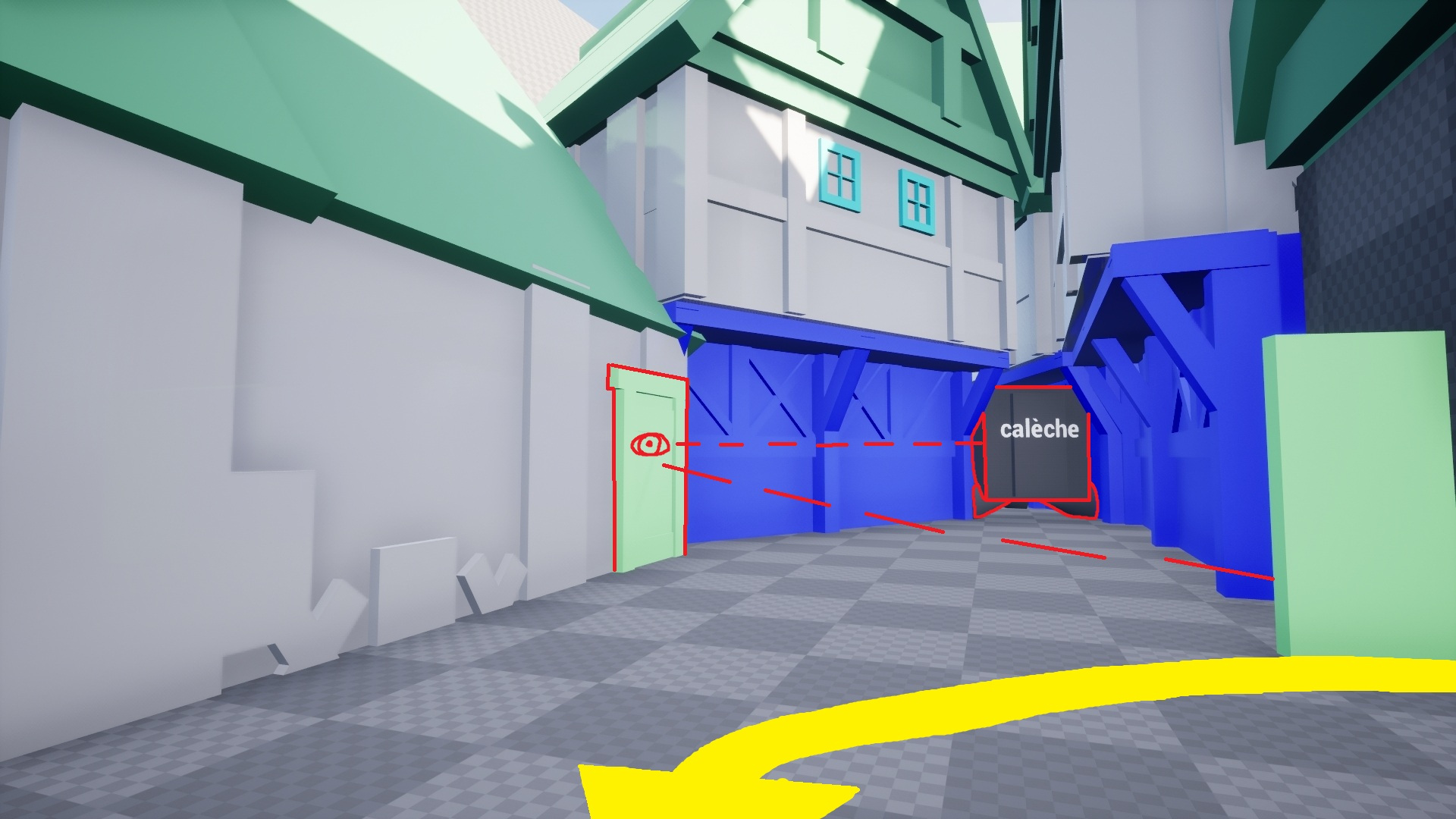
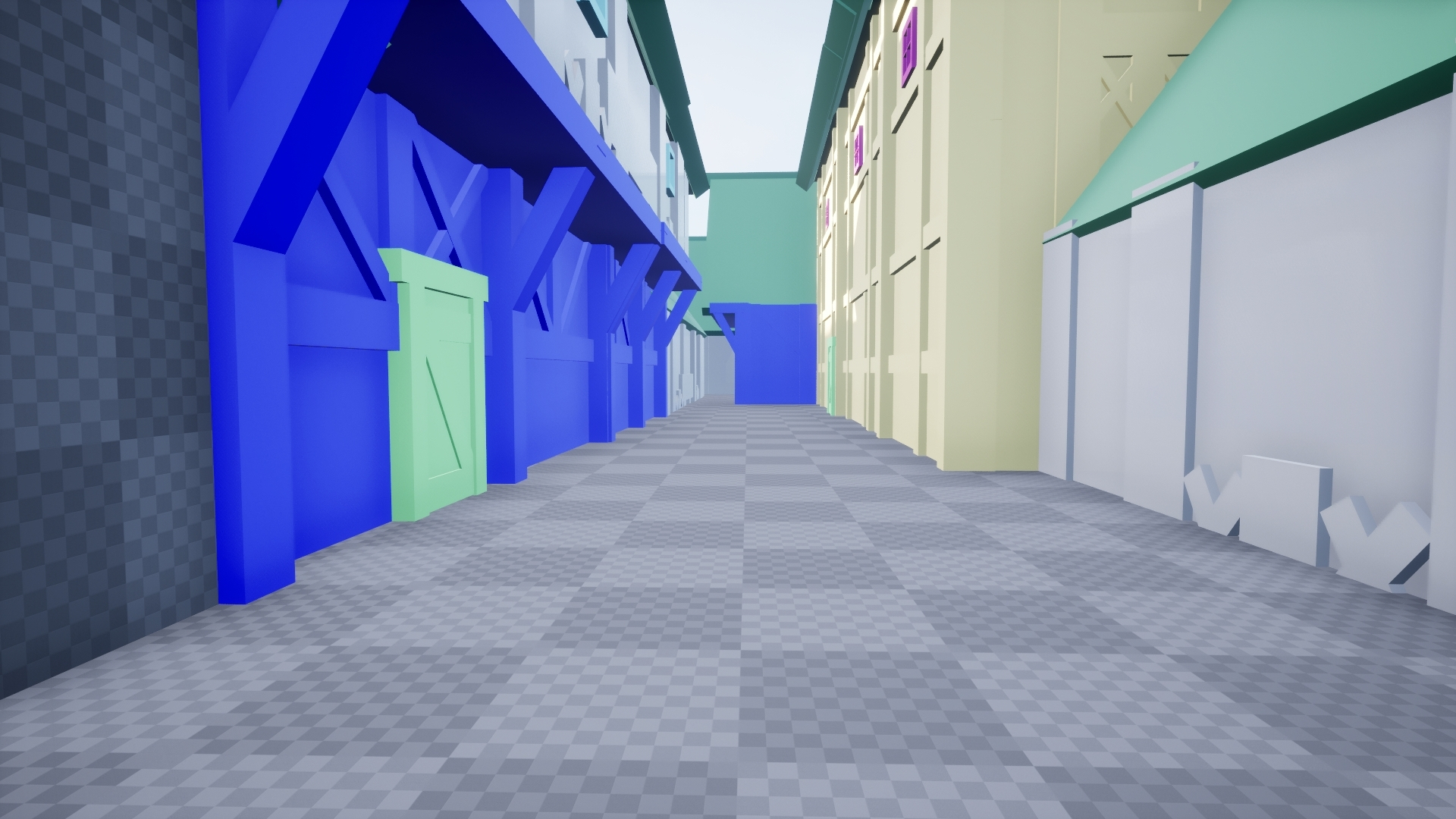
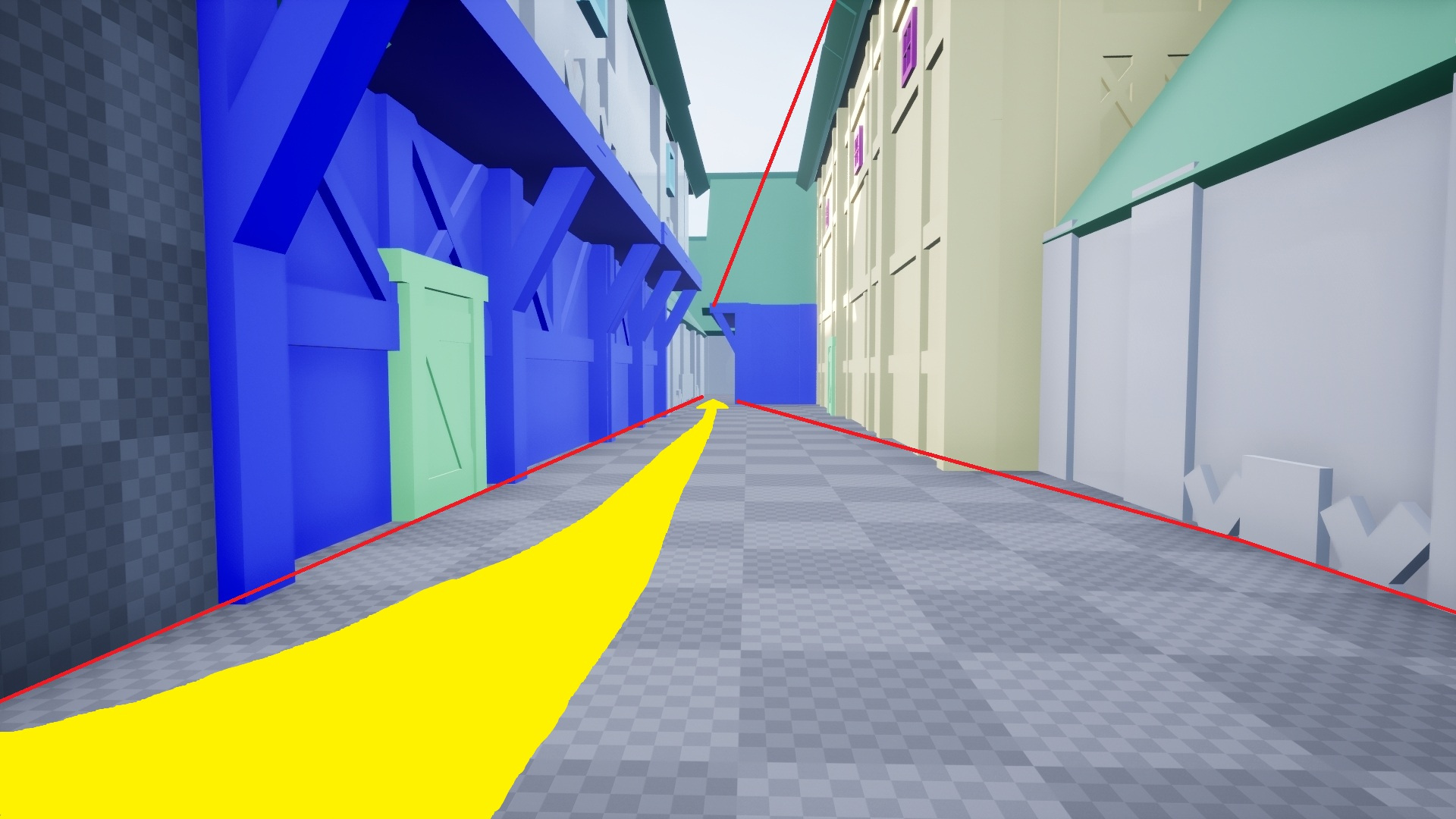
Once outside the house, the door positioned in front of the player is placed in such a way that it naturally turns the player’s view to the right, revealing that the path is blocked by a carriage.
Once outside the house, the player notices that the path previously blocked by the other carriage at the beginning of the level is now accessible. This allows the player to return to the starting area without taking the original path.