Game Design / Illustrator / Producer
- Iudicium Finale -

Information :
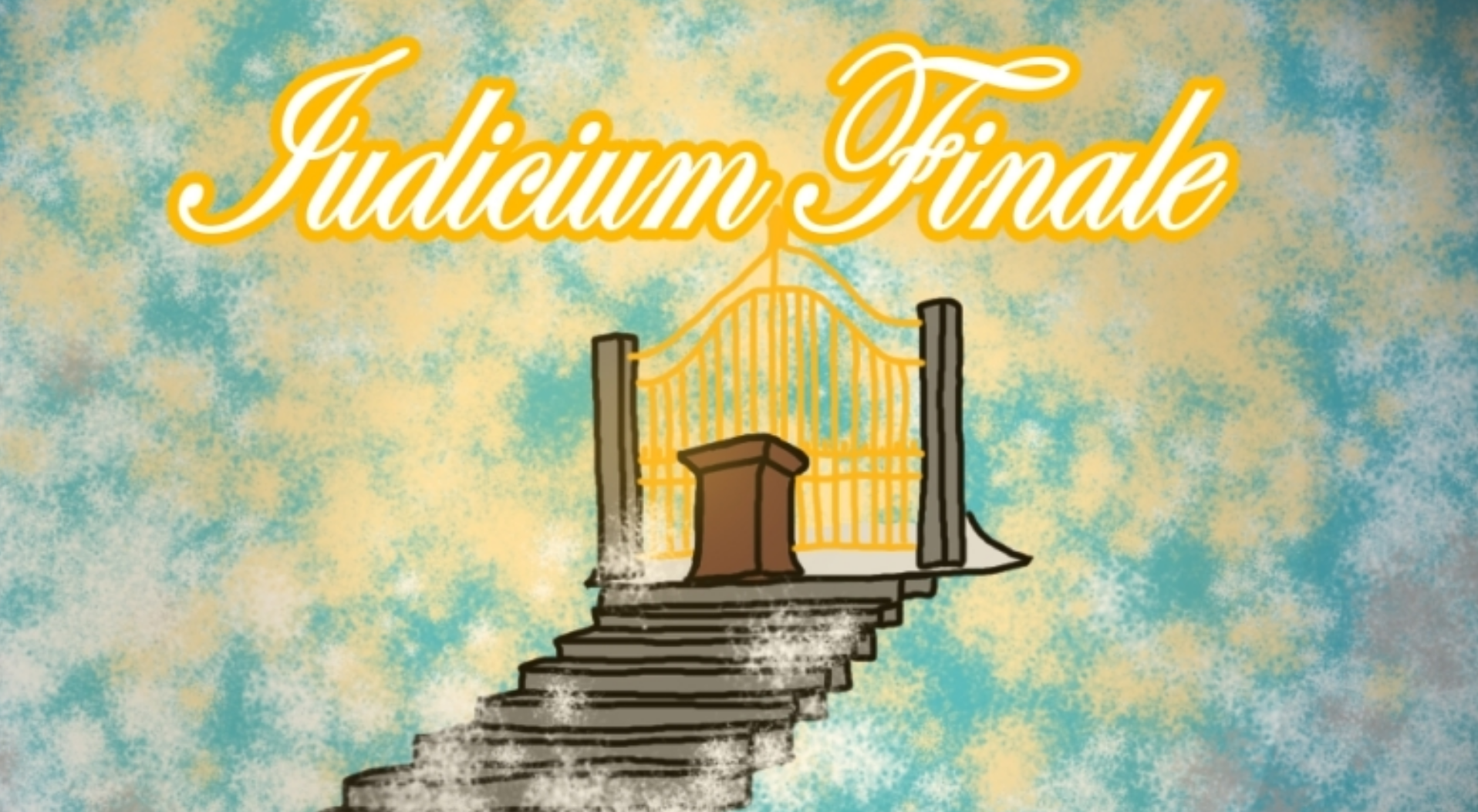
Iudicium Finale is a game created during a game jam organized by Gamagora students during the October 2025 holidays. In order to stay within the Halloween theme, the theme of “death” was chosen.
As a team, the objective was to design a simple yet polished game, achievable within the given timeframe. This led to the idea of Iudicium Finale, meaning Final Judgment, internally referred to as “Saint Peter Papers, Please”, with "Papers, Please" as our main inspiration.
The core gameplay is based on decision-making. Using various objects and pieces of information presented to the player, they must decide whether the character standing in front of them deserves to go to heaven or hell.
Thanks to strong organization, serious work, and effective communication within the team, we were able to achieve exactly the original vision of the project without having to cut content due to time constraints, unlike some other groups. The result is a complete, coherent, and functional game, delivered within the allotted time.
Although the game is intentionally simple, this game jam allowed us to work efficiently as a team and to realistically estimate the amount of work required to complete a project, and it also allowed me to demonstrate my multi-skilled in real working conditions. This, in my opinion, constitutes a professional skills.
Data :
5
Person involved in our Teams
during the GameJams
3 Days
Godot
Game Engine use
Role of Producer :
Alongside my role as a game designer, I also improvised as a producer on the project. I took on the role of a communication bridge between the design team and the programming team.
Concretely, I regularly met with the programming team in order to follow the progress of their work, ask questions when issues arose, and ensure that technical constraints were clearly understood by the design team. On my side, I also made sure to clearly convey to the programmers the design vision, the gameplay intentions, and the project priorities.
To facilitate this communication, we structured our work through clear and precise Excel documents, allowing the programmers to easily understand what the design team was preparing and anticipating, while remaining aligned with what was technically achievable.
It is thanks to this rigorous organization and this role of coordination between teams that we were able to move forward efficiently and deliver a finished and functional game within the given timeframe.
System design :
Although I did not hold the role of narrative designer on this project, I nevertheless designed the necessary tools so that the work carried out by the design team would be as clear and usable as possible for the programming team.
We therefore created an Excel document gathering all the characters, their information sheets, as well as the associated objects, specifying for each whether they lead to hell or heaven, and whether they are an important clue or not. Thanks to this structure, the design team was able to create ten characters with precise objects and descriptions, directly usable by the programming team.
In parallel, a Word document was created in order to centralize the ID references, making it easier to link the narrative data with the Excel file.
This organization allowed us to set up a clear, coherent, and immediately usable system design, which greatly strengthened the efficiency of the team’s work.
Illustration
Organisation
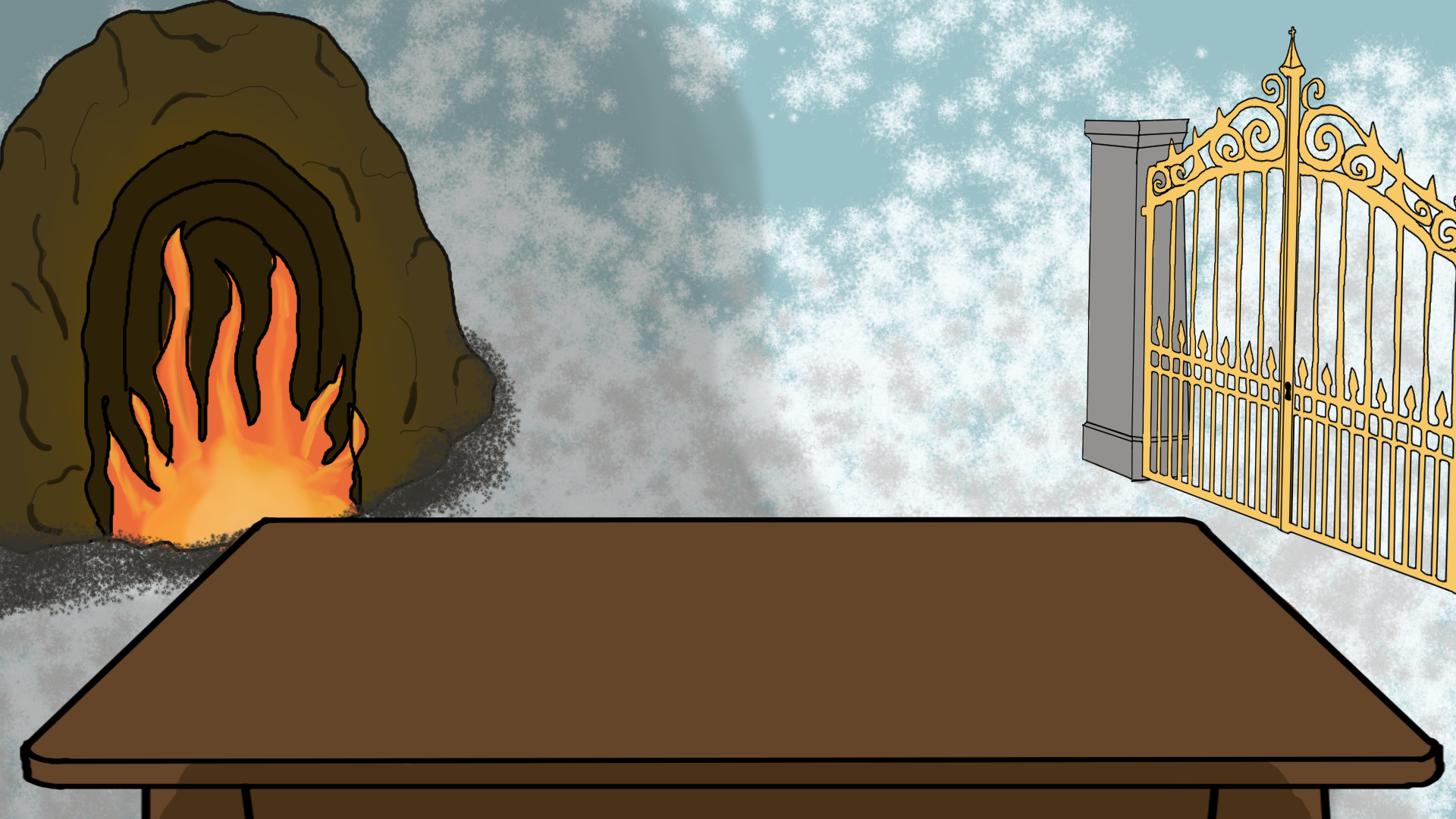
Within our team, there was no artist, which quickly became a blocker for the visual aspect of the project. In order not to slow down production and to avoid using online assets, I therefore took on an additional responsibility alongside my roles as game designer and producer that of illustrator.
All of the game’s visual elements (interfaces, illustrations, graphic assets) were thus entirely created by me. This initiative highlights my ability to be versatile, multitask, and make quick decisions in unexpected situations, while maintaining the overall coherence of the project.
Despite being the only person handling this part, I continued to work in a structured manner by setting up an Excel document dedicated to artistic needs. The design team could submit their asset requests there, while I clearly indicated what I was working on, what was completed, what could be delivered, and the overall progress status. This allowed the entire team to track my progress in real time and remain aligned with the project’s advancement.
Some examples of what I made
QA TEST
Thanks to our organization and our realistic objectives, compatible with the given deadlines, we managed to finish the game before the end of the game jam. This allowed us to afford a luxury that few teams can allow themselves during jams: QA testing.
We were therefore able to quickly identify bugs with the design team and record them, once again, in an Excel document, in order to structure the follow-up and facilitate communication with the programming team.
Once the game jam was over, we therefore had a fully finalized game, requiring no additional rework, as all tests had been carried out and all bugs fixed beforehand.
This work was also praised by all the participants of the game jam, who highlighted the fact that our game was truly finished.